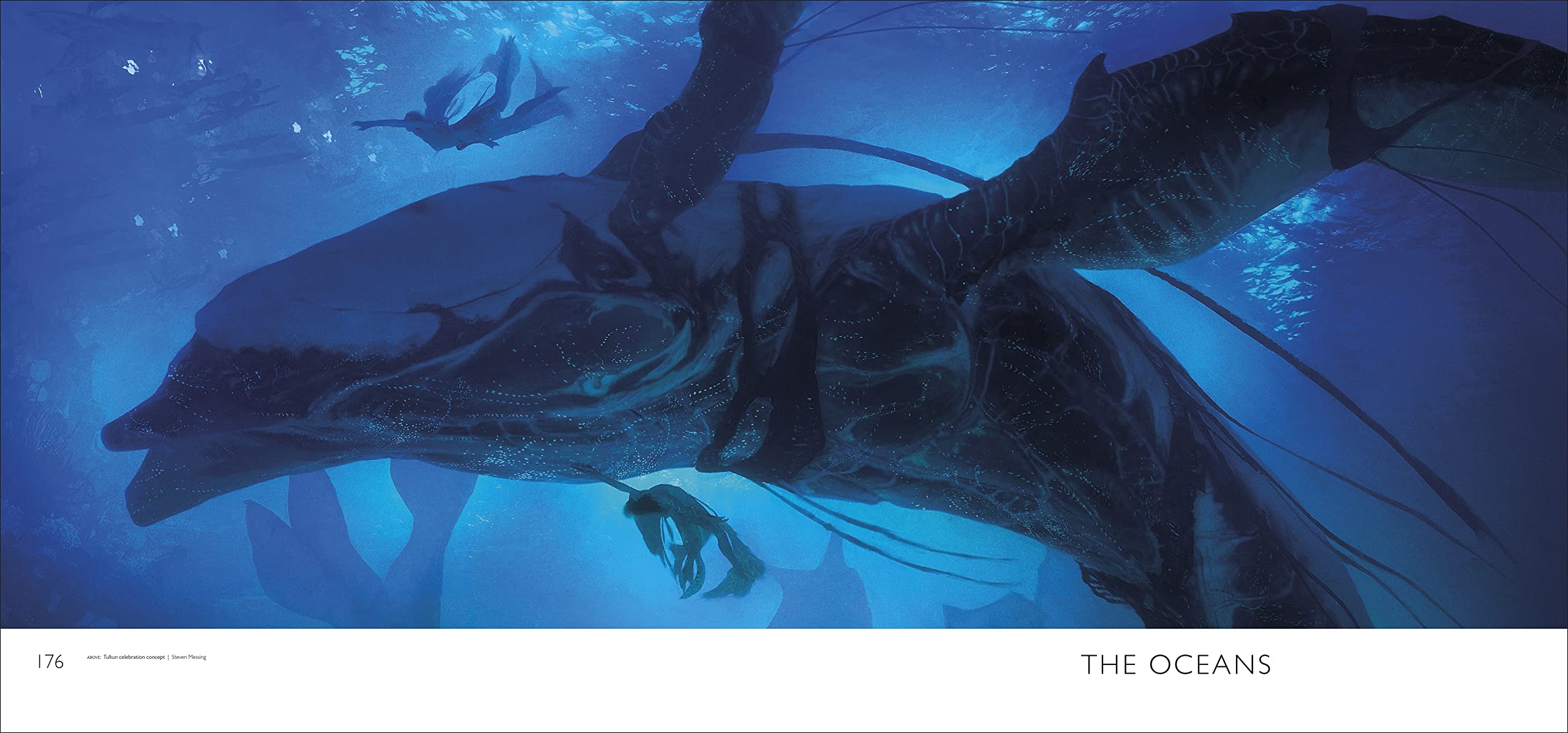

An article on three related topics—desire, happiness, and the Three Laws of Eywa—with comments from the philosophies of Stoicism, Buddhism, and the National Parks.
The Avatar franchise, as James Cameron has said, revolves around two groups: the takers and caretakers. They are, respectively, the humans and Na’vis.
The humans in Avatar 1 desired to take resources from Pandora and in Avatar 2 to colonize Pandora—to take it over and away from the caretakers. What sets apart these humans from the Na’vis in their relationship with Pandora can be summarized in the Three Laws of Eywa, known as the Na’vi Way.
Before I lay out these laws, I must mention that they also set apart (1) the objects of desire and (2) the source of happiness between humans and Na’vis.
Three Laws of Eywa

So, what are the Three Laws of Eywa, how do they determine #1 and #2, and what are the implications of opposing these laws?
They exist prior to the ancient First Songs and are adhered to by the Na’vis in both Avatar films:
You shall not set stone upon stone
Neither shall you use the turning wheel
Nor use the metals of the ground
Though their meanings may vary or lacks clarity because of their ambiguity, they possess clarity of intention—namely, one shall not deplete nature.
The first law, you shall not set stone upon stone, means that one should not build things with non-renewable substances like rocks. Instead, the Na’vis would build things with wood, which is replenishable yet sustainable.
The second law, neither you shall use the turning wheel, means that one should not build roads, which both marks the early development of civilization and would destroy plants and displace animals.
The third law, nor use the metals of the ground, means that one should not dig the ground, which would also ruin the natural habitat.
Desire is the prerequisite for happiness. When our desires are met, we are happy.
All in all, industrialization is forbidden. And industrialization is not desired. As Parker Selfridge himself observed in Avatar (2009), “We tried to give them medicine, education, roads, but no, no, no, they like mud!”
Now, desire and happiness are interconnected. Desire is the prerequisite for happiness. When our desires are met, we are happy. Think of the desire for food and water, image and reputation, money and possessions, friendship and belonging, adventure, etc. These are the objects of desire (recall #1). And the source of happiness (recall #2) is attaining these objects of desire.
“Happiness is Simple”

But the Three Laws of Eywa limit the objects of desire. One cannot desire stone-built nor wheel-built and metal-built things.
So what makes the Na’vis happy, we could say, are parameters.
Their wants are restricted. But their needs are met.
And because their wants are restricted and needs are met, they do not obtain more than what they want or need—unlike the humans. “Mud” should be preferred more than roads, wheels, and anything built with metal. Anything that is built with or requires these, if overused, will be detrimental to the harmony and flourishing of the Pandoran ecosystem—which is the fate of Earth in the Avatar universe.
The objects of desire for humans include not merely survival but survival in the context of industrialization, colonization, and breaking the Three Laws of Eywa. The happiness of the human race depends on these.
But before we move on, we need to define happiness.
Happiness, in the literature of philosophy, has a wide range of definitions, but it usually falls under two categories:
- A state of mind
- A life of virtue
We usually refer to happiness as the first rather than the second, or happiness in the subjective/psychological sense than the objective/axiological sense. In other words: happiness as a positive emotion—a feeling such as pleasure or contentment and tranquility—rather than a life of pursuing and possessing virtuous activity (Aristotelian), or a life marked by choosing what is preferable from things within and outside of our control (Stoic), or even a life filled with meaningful suffering for a higher good (Orthodox).
In the case of Avatar, we will focus on the first category of happiness but will borrow comments represented by the second category of happiness.
The Na’vis are happy with just “mud,” and this happiness relates to Traherne’s proverb in his poetry collection, Centuries of Meditations. He remarks that the world is made for us. And it is up to us whether to see the world, as it is, as a heaven or a hell.
The world is made for us. And it is up to us whether to see the world, as it is, as a heaven or a hell.
And I would add that we can make the world, as it is, still a heaven/garden or a wasteland.
“Happiness is simple,” says Jake in Avatar: The Way of Water as we watch the montage of him playing with his children and flying with Neytiri, but “it can vanish in a heartbeat.” That heartbeat moment comes when a new star appears, namely, the set of interstellar vehicles of the Sky People. And that is because their objects of desire completely oppose the Three Laws of Eywa—objects requiring stones, wheels, metals, etc. Hence the source of happiness (namely, attaining their objects of desire) involves defying these laws on Pandora, which they have done excessively and unstoppably on Earth.

The Sky People, then, is Jake and the Na’vi’s source of unhappiness.
*Note that I’m not promoting that humans ought to return into a state prior to civilization and industrialization (we’ll explore this in my upcoming article on Pandora and Ecotheology). I’m merely commenting on the implications of a race, the Na’vi, when adhering to the Three Laws of Eywa. The Na’vis may not have industry, but they do have technology—considering tools for hunting, warfare, etc.
But to step back a little bit, what makes Jakes’ happiness simple and how come the Na’vis are content with their (limited) objects of desire? And what can we learn from restricting or recalibrating our objects of desire and hence our source of happiness? Some truths from Buddhism and Stoicism can enlighten us on the philosophy of suffering and happiness in Avatar.
Everything is Everywhere
Buddhism tells us that the source of unhappiness is desire. We are restless, and we desire impermanent things such as money and possessions. (In the context of the Sky People, they are amrita and colonization.) And because we desire the impermanent, we desire what can be lost and thus what can make us disappointed or unhappy. Furthermore, Stoicism tells us that these things are not only impermanent but are sometimes out of our control.
The wisdom of the Stoics tells us: happiness should not depend on desiring and obtaining what you don’t have. We always desire more, including material possessions; and like the Sky People, material possessions as their object of desire and source of happiness have destroyed their planet. And they will eventually destroy another planet, Pandora, by breaking the Three Laws of Eywa. Now, there is a philosophy of happiness according to Stoicism that fits the mindset of the Na’vis.
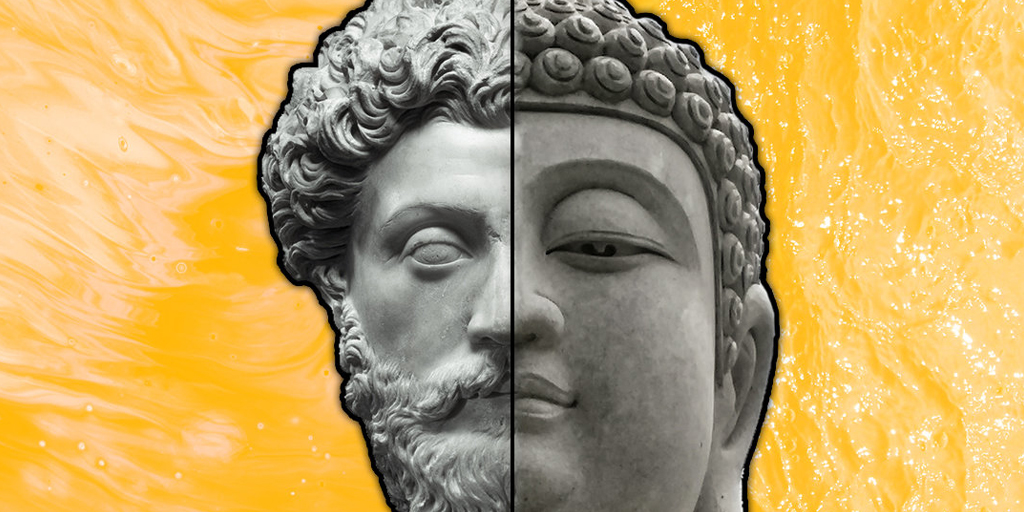
Stoicism suggests to us that happiness should not come from desiring what we don’t have, but instead, desiring what we already have.
And the Na’vis, I would argue, already have everything.
They have a home, they have family, they have sacred grounds, they have deep connection with the world and their inhabitants and ancestors, they even have pacifist poets and philosophers.
Everything is everywhere.
And again, nothing is ever lost—or everything is never lost. In both Avatar films, Jake narrates, “As the people have said, ‘All energy is only borrowed.’” This includes life, which when met with death becomes “one with the people” and with Eywa.
Happiness should not come from desiring what we don’t have, but instead, desiring what we already have.
Now, I didn’t describe how the Stoics practice desiring objects they already have, rather than objects that they don’t have (which again according to Buddhism is a path to unhappiness and suffering), but we can discuss the practices in relation to the sacred grounds in our National Parks.
The National Parks
A modern practice of Stoicism is fasting from things we already have—things as simple as our shoes, our bed, our friends. So, one practitioner would not wear shoes for a day, or would sleep on the floor once a week, or would practice “negative visualization” (meditating on what it’s like without our friends), so that he would desire the objects of desire that he already possesses.
And one of the points of fasting is to prepare for feasting.
That is, to feast on what we already have but choose to abstain for a time.
Though we don’t see this specific Stoic practice in Avatar—or any other film, really—we can at least see what enjoying the things one already has through how the Na’vis interact with what is external to them. (After all, happiness as a state of mind depends on objects of desire, which are both internal and external to us.) This fasting/feasting dynamic that maintains happiness includes Jake’s return to a date night with Neytiri, in a grand way the Tulkun’s return to the Metkayina, and in simple ways Kiri and Tuk’s return to appreciation of things in nature.
We can do the same in the kind of world that doesn’t adhere to the Three Laws of Eywa. In fact, such a world necessitated the idea and reality of the National Parks.
The National Parks boast some of the oldest, grandest, most sublime beauties of this earth—but ones that are open to public.
Some of the famous ones in America include Yosemite, Mount Rainier, Yellowstone, Zion, and the Grand Canyon. For Avatar fans, the Hallelujah Mountains are inspired by Zhangjiajie National Park in China.






The National Parks came about because newcomers to America desired to utilize and commercialize everything, which resulted in building commercial businesses on top of the Niagara Falls and building a dam in Yosemite. If the National Parks idea didn’t become a reality, greed almost (historically and aggressively) commercialized more places on what is today are preserved in the National Parks.
But the idea was molded and fought into a reality because there were groups on both sides: those who desired and fought to conserve the pristine and unblemished beauties of this earth, versus those who desired and fought to utilize them. In other words, to generalize, the origin of the National Parks, much like the story of the Avatar franchise, is the conflict between takers and caretakers.
To prevent the takers from taking, they need to be forbidden from these sacred grounds, but to persuade the takers to preserve these sacred grounds or to convert them into caretakers, at least some of them need to see what is worth preserving. This is the paradox of “people will desire to destroy it if they come” but “people will desire to preserve it *only* if they come.”
We could say that this is the story of Jake Sully. In Avatar (2009), it takes Jake to see and fall in love with the forest, the people, and Neytiri so that he fully desires to preserve than destroy the Hometree.
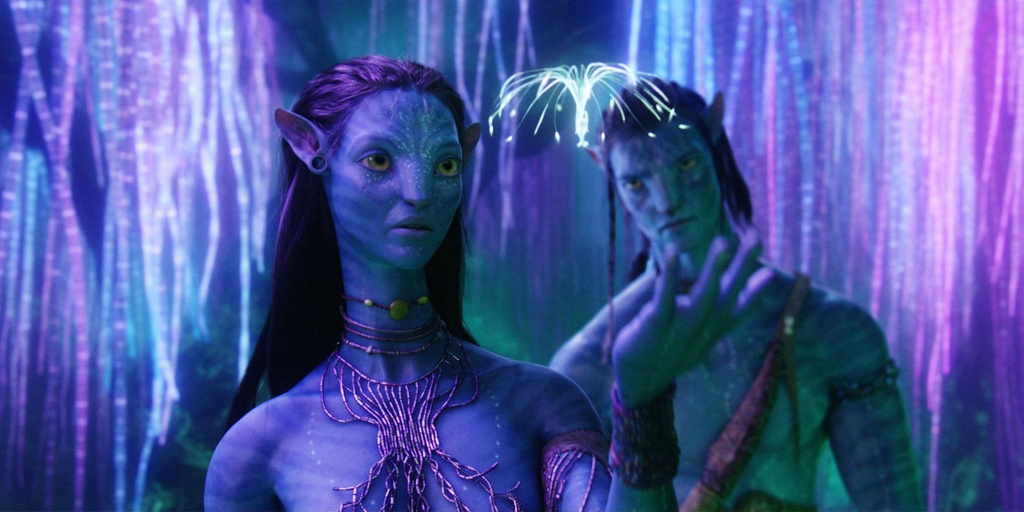
But to preserve such a place like it in our own world—if we pretend that the grandest parts of Pandora are our National Parks—the indigenous and other settlers had to leave their homes. (In times of peace, there would be outsiders as trespassers, and in times of wars, there would be violence among tribes.) This is a tragic inevitability since they were faced with a dilemma: either
A. The inhabitants must resettle elsewhere in order to keep their home safe
or
B. The inhabitants and their home will be destroyed/commercialized
And such a dilemma exists because human civilization, as a whole, does not adhere to the Three Laws of Eywa but the desires of takers. Now, our challenge is to both preserve yet enjoy the wonders of nature as a species that do not adhere to these laws. The National Parks, and thereby the preservation of the grandest Pandoran beauties of this earth (including their fauna), would not exist without accomodations and trails for caretakers, i.e., minimal and optimal use of stones, wheels, metals.
Now, our challenge is to both preserve yet enjoy the wonders of nature as a species that do not adhere to these laws.
Are we happy with what we already have? Will we desire happiness from what is intended to be prevented by the Three Laws of Eywa, namely, from objects of desires that will ruin the home of our children’s children? Or will we wisely restrict and recalibrate our objects of desire as our source of happiness?
Happiness is simple. And we have all the power to steal that simplicity from our children’s happiness and our Mother’s happiness. If human history is as old as a human individual, that happiness can vanish in a heartbeat.
As I have written in my first article, Earth is Pandora.
May we embody the childlike wonder and gratitude of Kiri and Tuk, the love of the forest as does the Omaticaya, and the love of the sea as does the Metkayina. This is the Na’vi Way.
Oel Ngati Kameie,
– Pandoran Philosopher

 PANDORAN PHILOSOPHER
Leave a comment