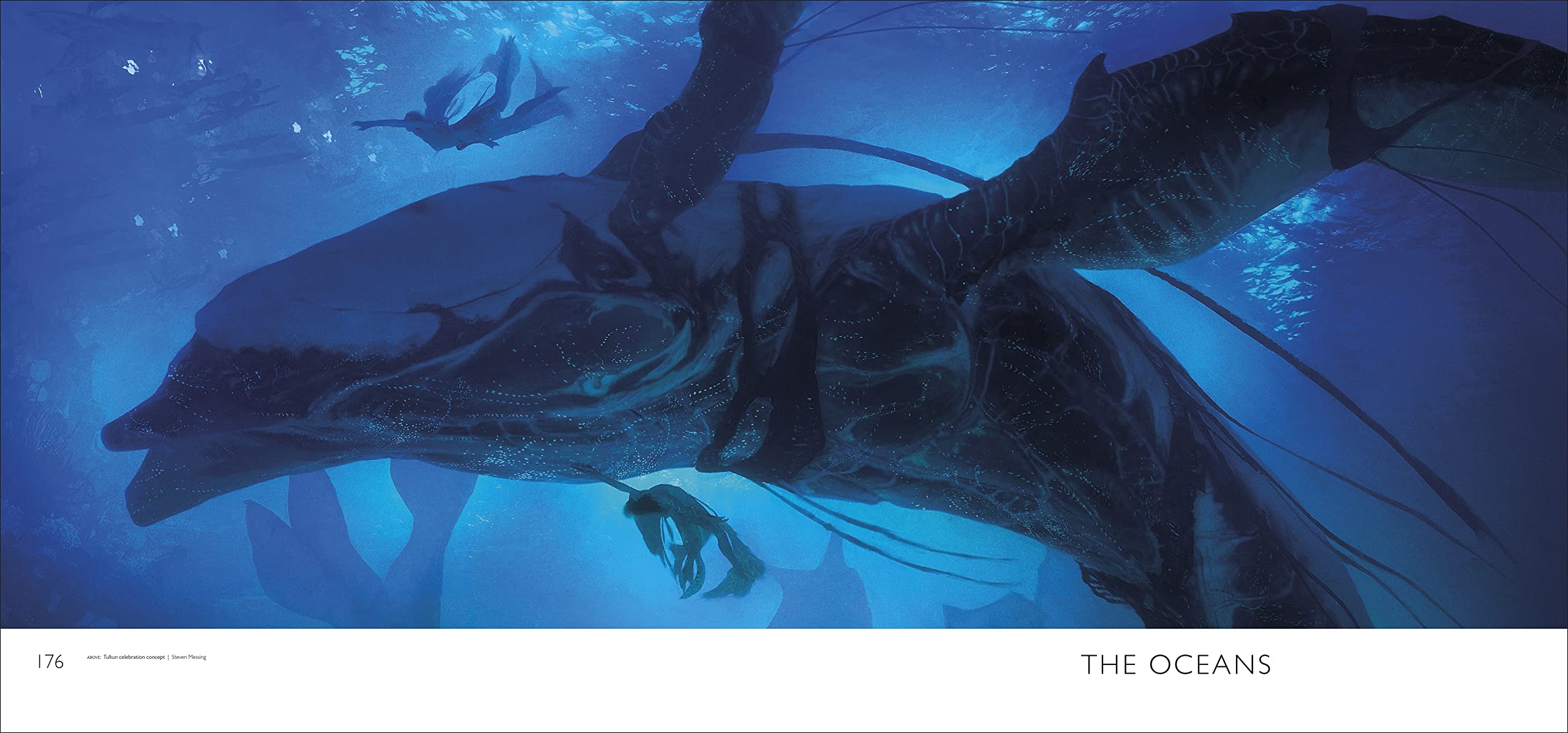

Death has “fascinated, haunted, and ultimately defined” human beings. We have and will always face the certainty of death.
Death is inevitable.
Perhaps death will consume every body… but not every mind. This is true in the world of Avatar, where there are many different versions of immortality.
*Disclaimer: major spoilers ahead.
Death Transcendence
In this article, we will call life without death or life after death as “transcending death,” and there are many ways to experience this in the Avatar universe:
- Life Extension, through Amrita
- Mind Uploading, through Recoms
- Becoming One with Eywa, through Death
All three require that every person is composed of two parts: mind and body. Think of the body as a hard drive and the mind as the files in the hard drive. The files can be uploaded or transferred into a new hard drive, which in this case is a recom or Eywa.
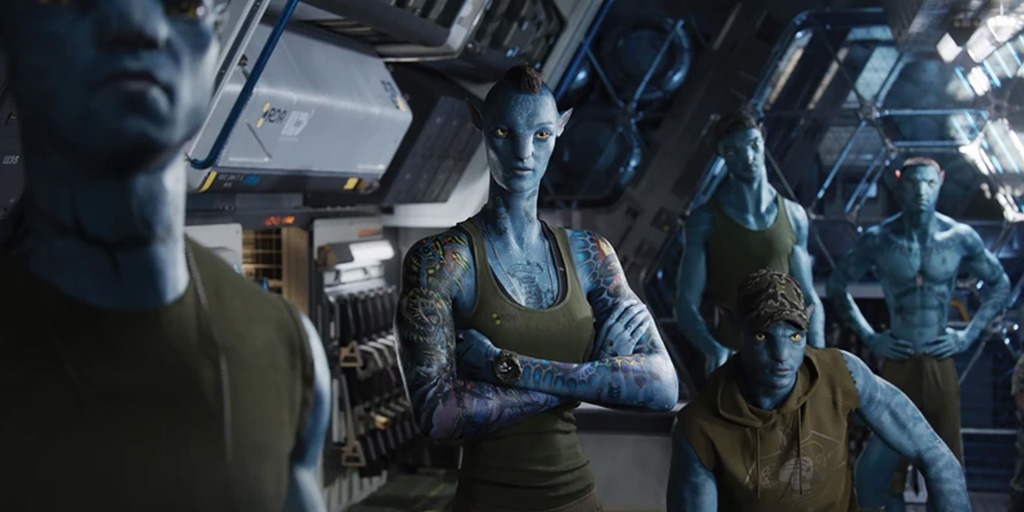
We should apply the difference between mind and body to the ways of transcending death in Avatar’s terms: first, amrita is a tulkun substance that prevents the aging, and therefore death, of both the mind and body; second, recoms are avatars which are new bodies but with old minds; and third, Eywa welcomes the minds who left their bodies into her abode.
Let’s go through each of these ways of transcending death (including a brief section on Kiri) and explore their rich mythology and differing approaches to immortality.
I. Physical Immortality: Life Extension
Earth and human beings are dying.
But only the latter truth (“human beings are dying”) is acknowledged in the world’s most influential classics, such as Homer’s Iliad and Odyssey, The Book of Genesis, Plato’s Republic, Dante’s Divine Comedy, Shakespeare’s Hamlet, and many more. Earth has always been alive and well, while human attitudes and responses towards human aging and human death is a prominent theme in these great classics.
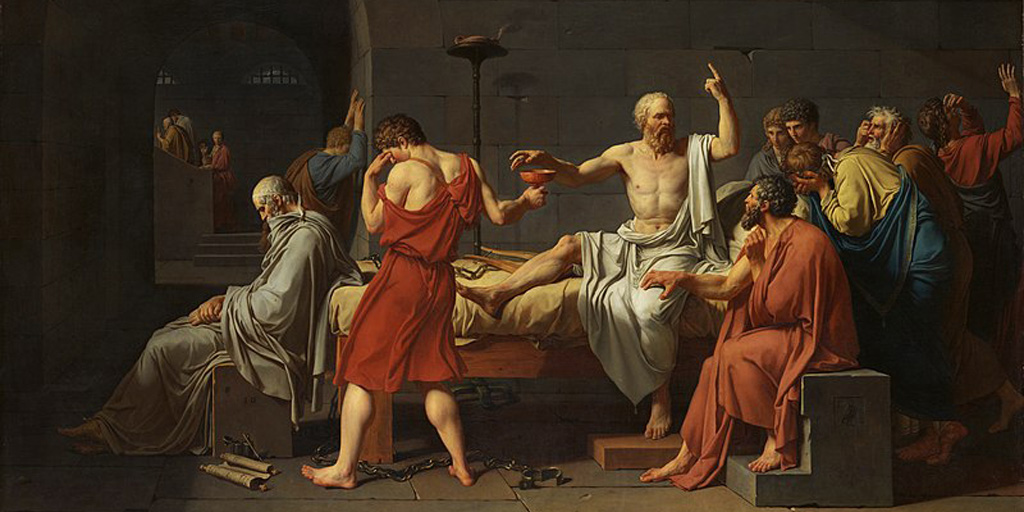

Death is what urged Plato’s readers to define and pursue true justice or “right order” of the soul, Homer’s readers to pursue glory via dueling combat and be “storied” in history, and Genesis’ readers to pay attention to fertility and genealogy, since the closest approach to immortality at the time is to survive one’s family and preserve one’s bloodline. Each tradition has the art of dying.
In the Avatar world, however, both earth and humanity are dying. Hence, there are more efforts to prevent the inevitable, death, by not only conquering Pandora but preventing aging in the first place (both of which are not possible in the world of great classics). In any case, the anti-aging substance called amrita is inspired by great classics.
Amrita
Amrita, the yellowish substance extracted from tulkuns, “stops human aging.” The term amrita is a Sanskrit word that means “immortality.” It is an elixir of immortality. It is the drink of deities and demons in Hinduism. And in The Way of Water, it is our drink.

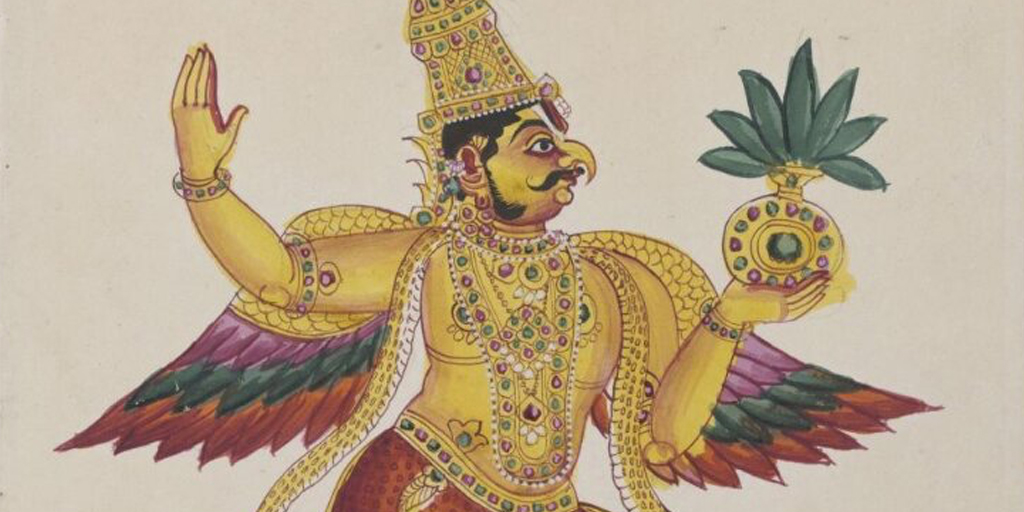
The elixir of immortality in the form of a drink is present throughout world religions, ranging from the Haoma in Vedic literature, aka Soma in Zoroastrianism, the Eucharist in Catholicism and Orthodoxy, etc. Such elixirs promise eternal youth or eternal life.
In a sense, humans are becoming both deities and demons in the Avatar world, because the wealthy would drink the “drink of the gods,” yet they must kill many tulkuns to do so through a ship that is called the “demon ship.”
To make ourselves as immortal as divine beings, we must make ourselves as immoral as demonic beings.
Life extension in The Way of Water, then, is a win-lose situation. In order to extend life, one must end life. (That is, the life of tulkuns.) So, paradoxically, to make ourselves as immortal as divine beings, we must make ourselves as immoral as demonic beings.
Another alternative to transcending death by life extension is mind uploading.
II. Digital Immortality: Mind Uploading
The Avatar program can only function if one can transfer one’s mind into another body.
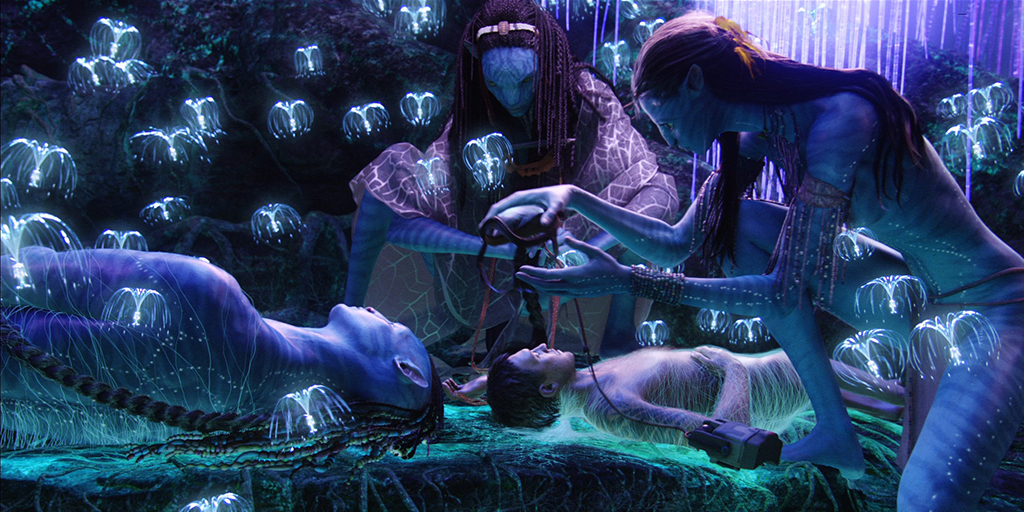
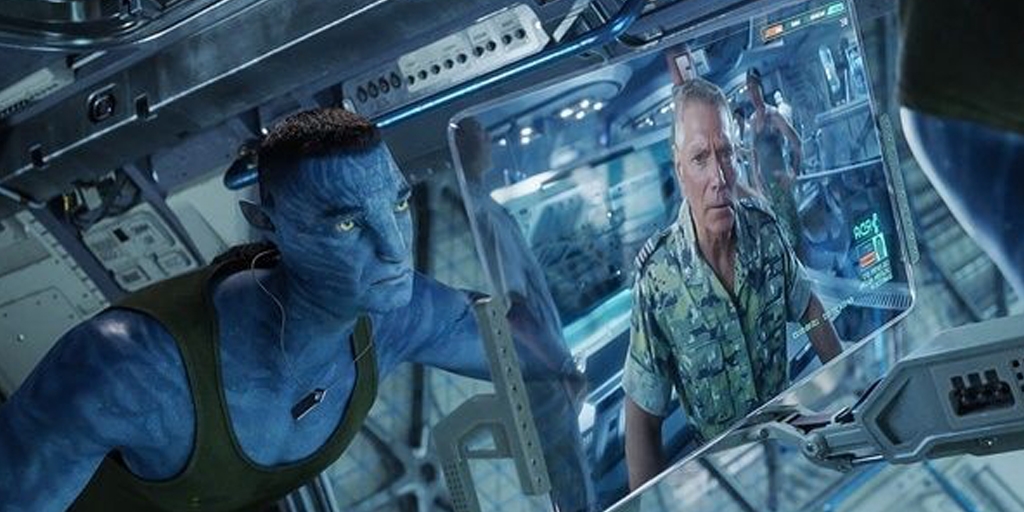
Now, if the mind can be uploaded, and if bodies are still aging, then minds could be uploaded into new bodies over and over again. Such is the case with avatars called recombinants.
Recombinants are avatars with memories of the dead—that is, a duplicated mind that is uploaded into an avatar. Technically speaking, it does not resurrect the dead.
Quaritch, for example, is not “resurrected” but “duplicated.” In other words, the real Quaritch is dead, and an entirely new Quaritch lives.
Contrast this with Jake. While Jake’s mind is transferred into Jake’s avatar, Quaritch’s mind is duplicated into Quaritch’s avatar (which is why the recom Quaritch does not know, let alone remember, the human Quaritch’s death). We can say that the mind of the new Quaritch is a clone, rather than the continuation, of the old Quaritch.
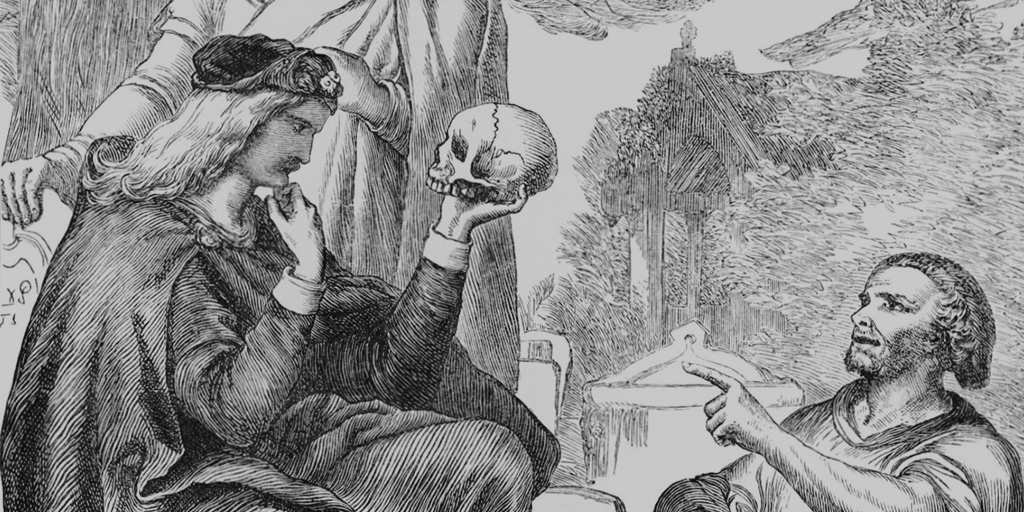
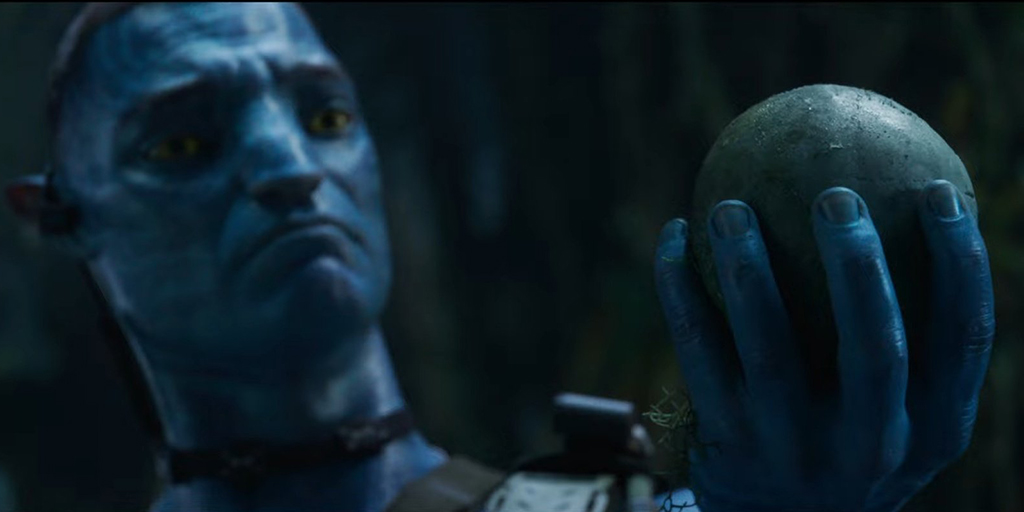
A famous scene in Shakespeare’s Hamlet is Prince Hamlet lifting up and gazing at a skull to remind him the brevity of life and certainty of death. But in James Cameron’s Avatar, through recombinants, the impossible happens: to lift up and gaze at one’s own skull.
“To be or not to be” is not a choice anymore. Digital immortality only gives us the option “to be.”
Immortality has gone secular. Unhooked from the realm of gods and angels… unlike [life extension], mind uploading could actually offer something tantalizingly close to true immortality.
Francesca Minerva
This prospect of digital immortality will stun Homer, Plato, and Dante, whose brevity of life and certainty of death provides meaning to immortality. For these authors, what we do in the shortness of life matters because we have limited time to affect the world and affect the afterlife.
Death, for them, is not something to be feared, but rather whether we die a good or a bad death, or whether our life is considered worth living when we die. This, one might argue, is true in the world of na’vis. But does this philosophy apply to the mysterious child of Grace and miracle child of Eywa, Kiri?
Kiri
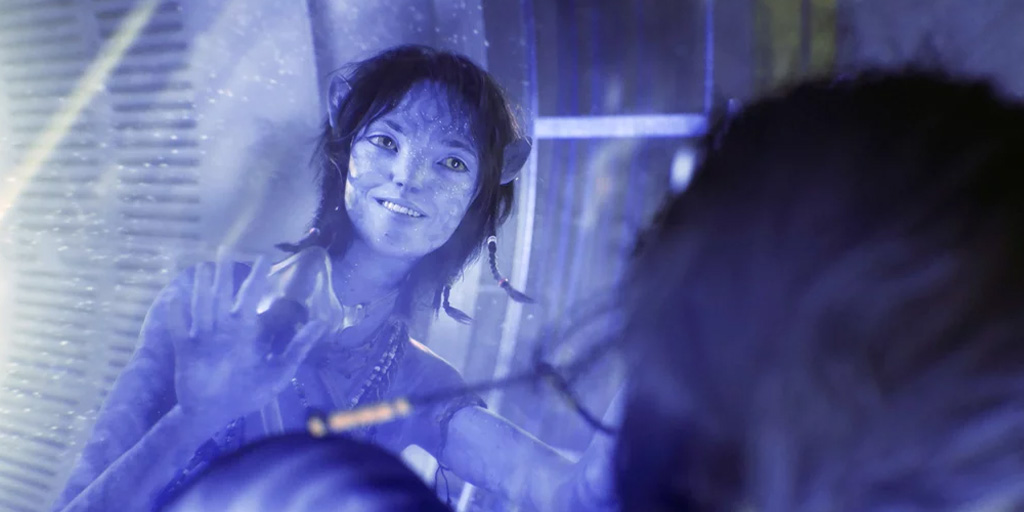
A shared curiosity among the fanbase is the person of Kiri. Is Kiri a product of mind uploading? Is she a form of a recom?
Kiri is different from recoms. While recoms are new bodies with old minds, Kiri is a new body with a new mind. She is not a recom of Grace; neither she is a recom of Eywa. But she can be said to be a symbiosis of Grace and Eywa—one who is born of Grace and led by Eywa.
Whether she is the avatar of Eywa, or the humanoid incarnation/embodiment of Eywa, perhaps we will find out. But she is not a recombinant, given that the mind of Grace lives in Eywa rather than in Kiri.
And this brings us to the radically different approach to immortality as envisioned by the na’vis.
III. Mystical Immortality: One with Eywa
In the Avatar world, the na’vis are “never dead.” Although their bodies die, their minds or souls become one with Eywa. Their souls do not become Eywa but rather reside in Eywa.
With the brevity of life and certainty of death—there comes immortality of life after death.
The na’vis are “never dead.” Although their bodies die, their minds or souls become one with Eywa. Their souls do not become Eywa but rather reside in Eywa.
The na’vis do not seek physical immortality because that would require the amrita, obtained by killing their spirit brothers and sisters, the tulkuns; nor do they seek digital immortality because that would require our technology, which is contrary to the Three Laws of Eywa.
And na’vis desire neither kinds of immortality not only because they are gifted with mystical immortality with Eywa but also because neither Pandora nor na’vis in Pandora are dying (unlike Earth and humans on Earth).
Spirit Tree

When one’s mind or soul resides with Eywa, one’s communities can interact with such mind or soul through the Spirit Tree. I have wondered about why trees are the medium to interact with those who are in Eywa, and there are several reasons which are universal in world religions and cultures. Trees symbolize:
- Life that is ever ancient and ever growing.
- Rooted interconnection with nature.
- Knowledge and wisdom.
In other words, connection with ancestors, with nature, and with wisdom.
The first symbol conveys that ancestry, family, and genealogy (everyone in between ancestry and family) are one. Every person is biologically linked to those who come before and after them, just as every branch is naturally linked to either another branch or the trunk of the tree.
So, mystical immortality with Eywa is not just an individual matter but a communal matter. One resides not only with Eywa but also with every other person—ancient and recent—who resides with Eywa.
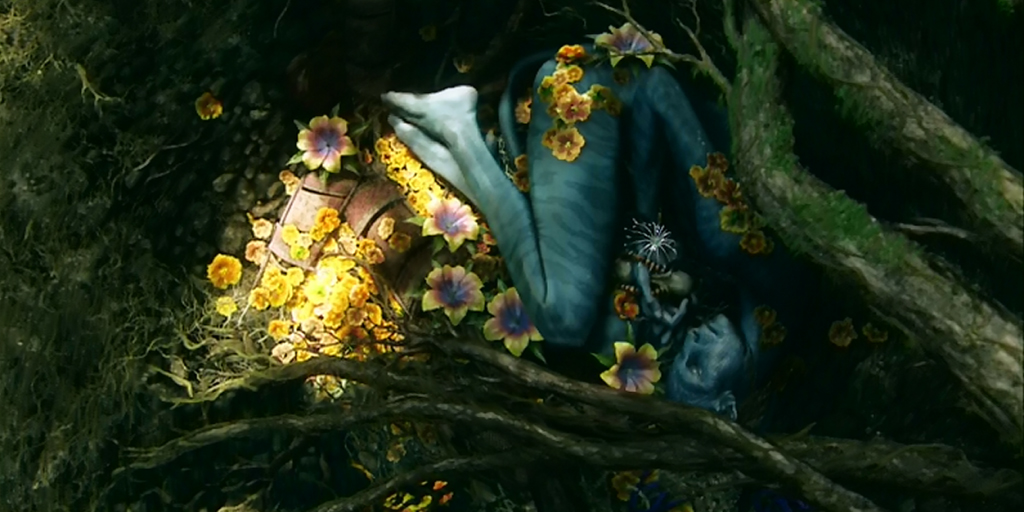
The second symbol has to do with nature, as trees are deeply rooted in the ground yet benefit those above the ground. The na’vis believe that “all energy is only borrowed,” as the life of a na’vi is dependent on nature, which they respect, and the death of a na’vi is a return to nature. Both the forest and reef people bury their dead–by the roots of a tree in the former and in the ocean of algae in the latter (cf. “the sea if your home.”)
Mystical immortality with Eywa thus respects nature, as sacred sites of nature are the places of rest for, and means of connecting with, the dead.
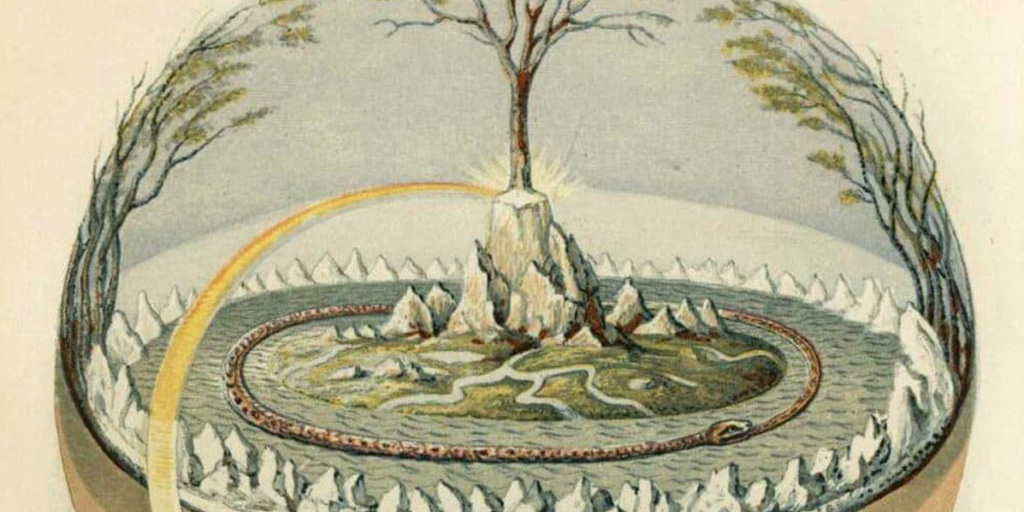
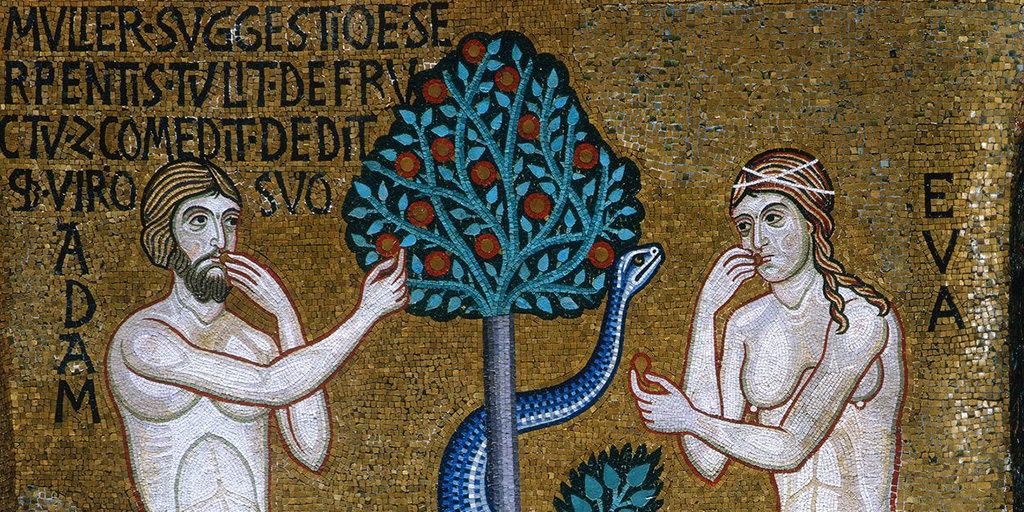
The third symbol is knowledge and wisdom, reminiscent of sacred trees in world cultures, ranging from the Tree of Life and Tree of the Knowledge of Good and Evil in the Judeo-Christian religions to the Cosmic/World Tree in the Norse traditions, even Trees of Valinor in the Tolkien legendarium.
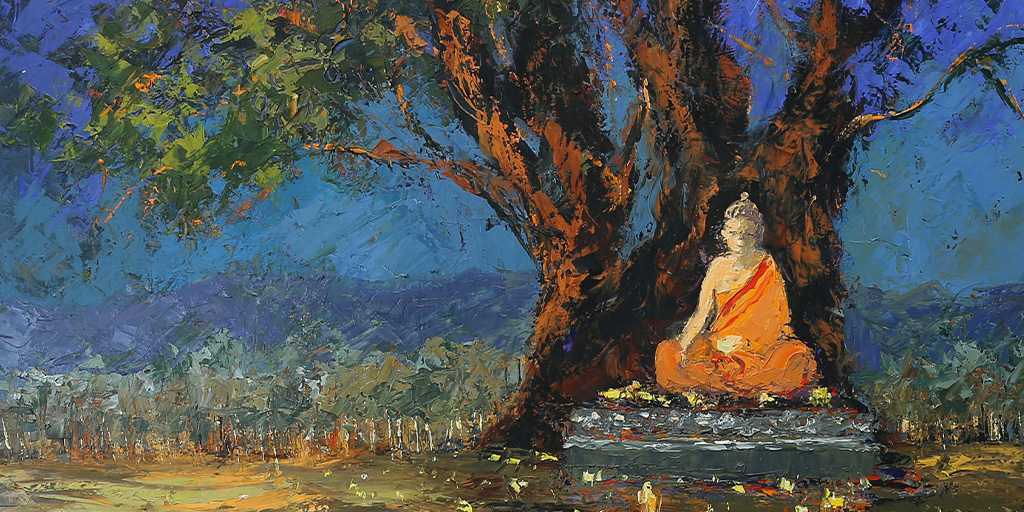
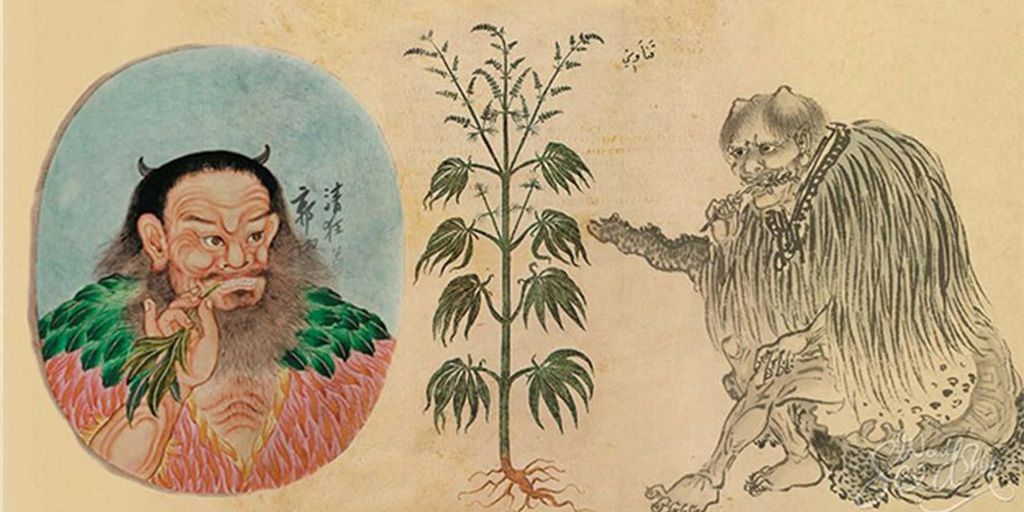
Not only the Buddha and Odin were under a tree in achieving great enlightenment but also myths of great discovery are associated doing the same, such as Newton in the case of gravity and Shen Nong in the case of tea.
IV. Symbolic Immortality: One with the People
I have talked about physical immortality (Amrita), digital immortality (Recoms), and mystical immortality (Eywa).
But there is also another kind of immortality, what is called “symbolic immortality” by Lifton. It is the multiple kinds of legacy of those who have passed away.
In a “meta” way, Avatar: The Way of Water film both begins and ends with the songcord.
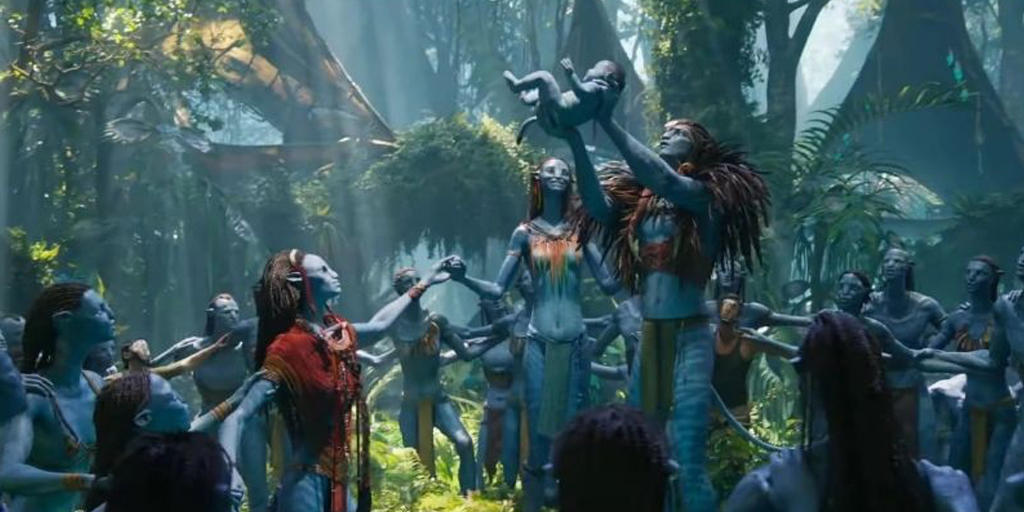
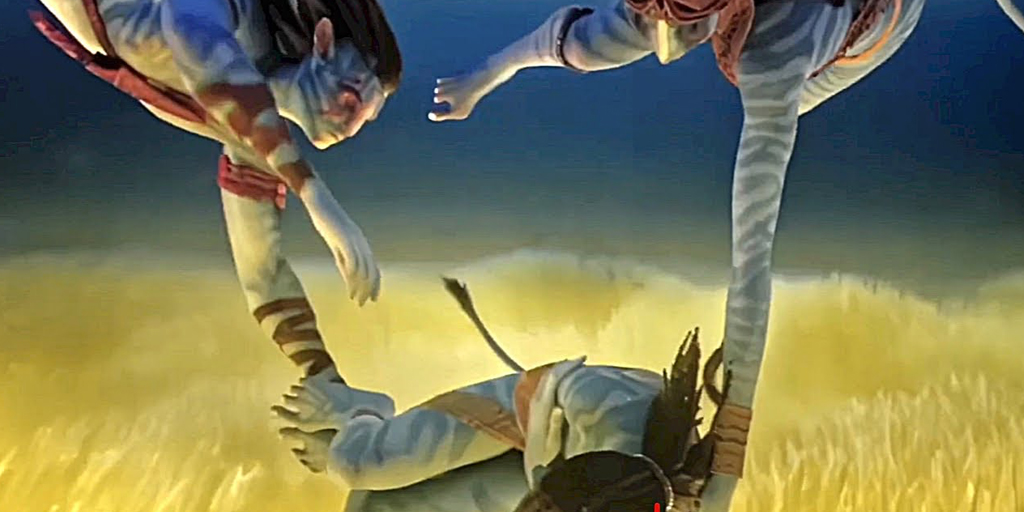
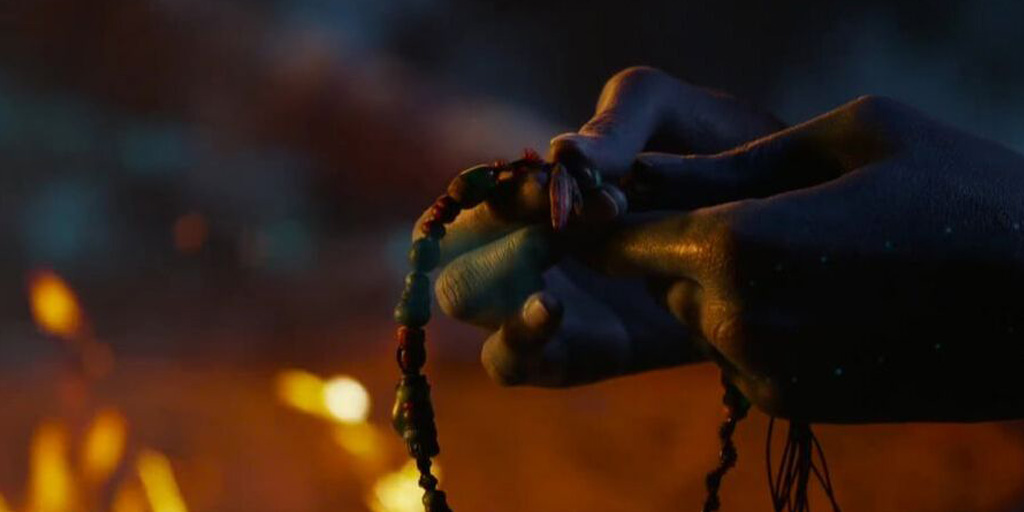
Such an example in Avatar is the songcord. The songcord symbolically immortalizes someone’s life and death. It acknowledges the cycle of beginnings (life) and endings (death) and everything in between. In a “meta” way, Avatar: The Way of Water film both begins and ends with the songcord. The first songcord is sung celebrating the new life of Neteyam and the last songcord is sung remembering the death of Neteyam.
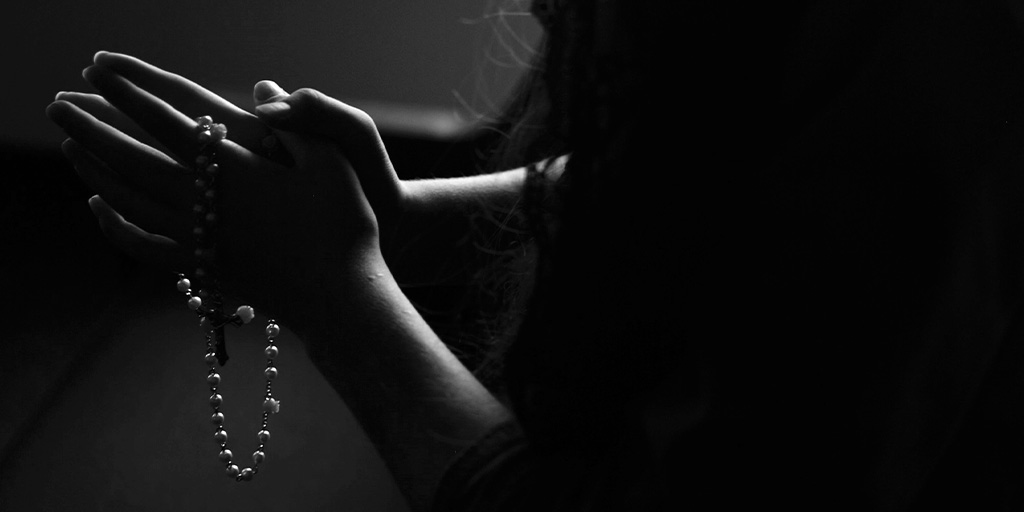
This is reminiscent of record-keeping through beads called Wampum in Eastern Native American tribes and the story of God in fifty beads called Rosary in Western Christian rites. But there is more to symbolic immortality than just creative means.
Patterns of Transcendence
In the days of old, when there is no technology to transcend death, nor is there a clear afterlife that follows from death, there are other ways to transcend death in different forms of symbolic immortality, or what Lifton calls patterns of transcendence. Four of them are: biosocial, creative, theological, and natural.
- Biosocial would be bearing children or bloodline and genealogy—those who will continue and protect the family name and values. (This is culturally significant in China and Japan).
- Theological would be one’s self being part of the beliefs symbolized and practiced by one’s religious community, such as being remembered, venerated, and prayed for after death through ritual.
- Creative would be works through “teaching, art-making, repairing, construction, writing, healing, inventing, or through lasting influences of any kind on other human beings.”
- Natural would be the keeping or scattering of one’s body in the world.
Thus, if the 3 kinds of immortality we have discussed earlier (physical, digital, and mystical) are impossible, then these 4 patterns above are the best ways, so to speak, to transcend death. And the na’vis accept these as such.
Biosocial would be the continuation of the Sullies’ bloodline and name, theological would be the religious beliefs and practices such Sullies’ interaction with the Spirit Tree, creative would be the Sullies’ songcord and ornaments, and natural would be Sullies bodies buried in a sacred site of Pandora.
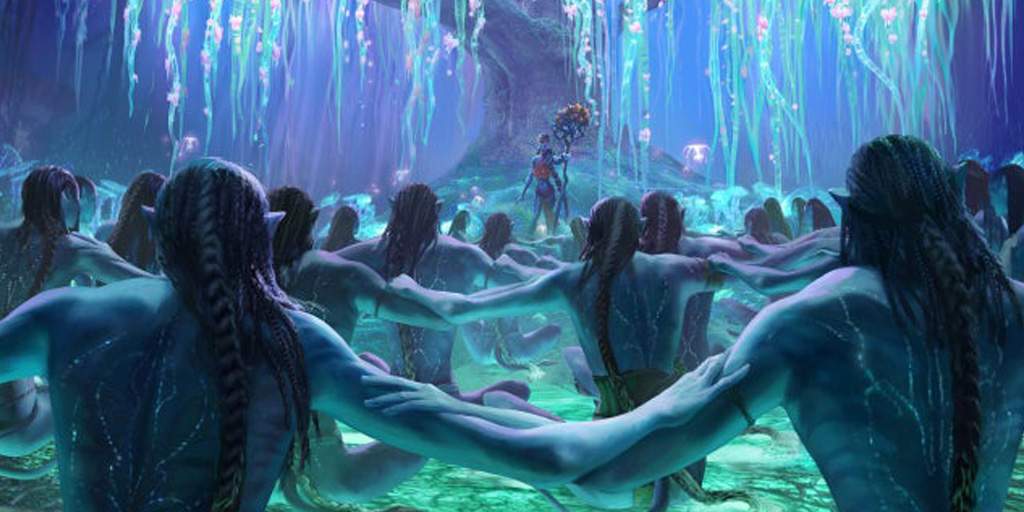
If humans have made death the enemy, na’vis have made death a friend. With Eywa in the picture, death becomes the door from life to life. Through her and in her, we mortals are immortals.
Oel Ngati Kameie,
– Pandoran Philosopher
 PANDORAN PHILOSOPHER
Leave a comment