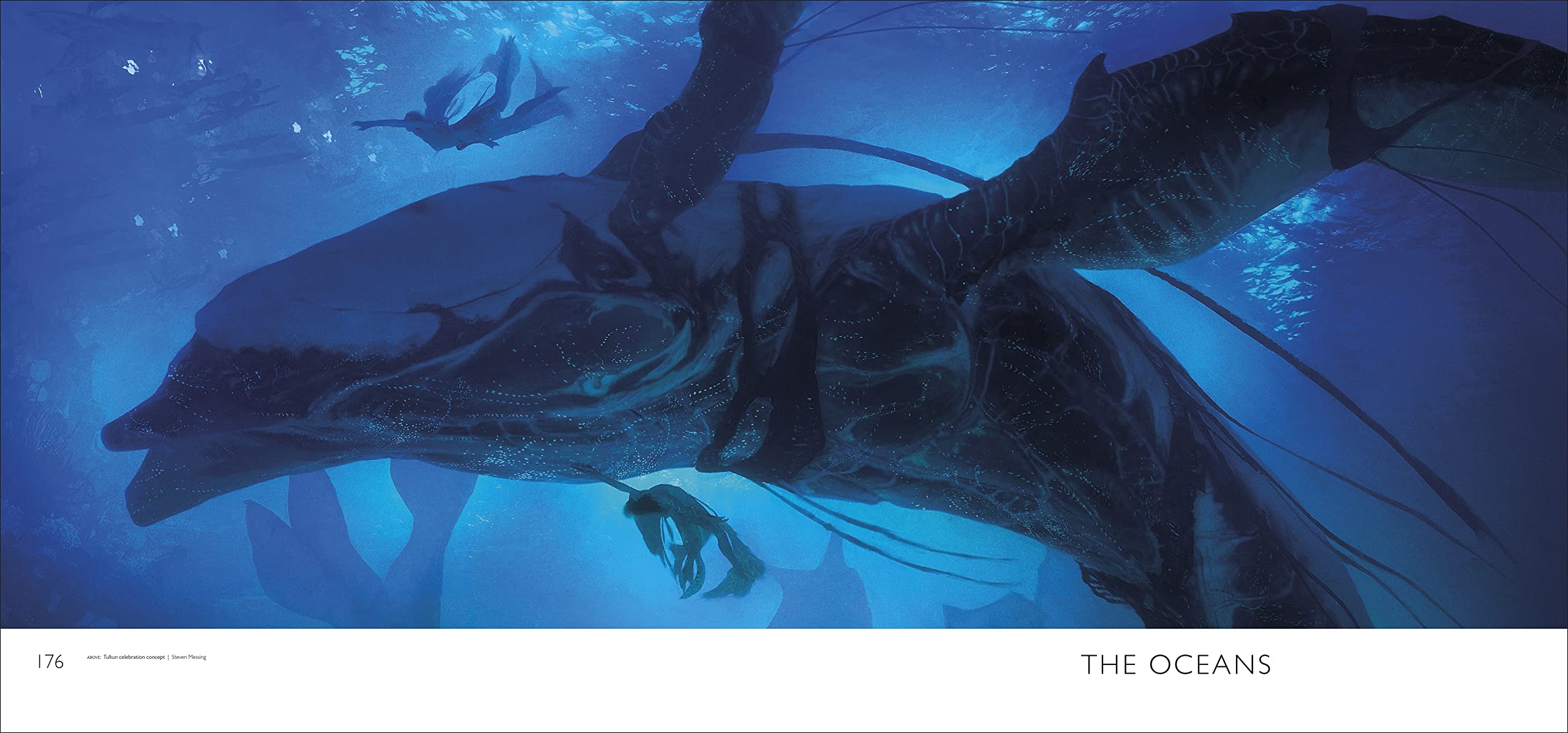

The world of Avatar is deeply ecological and theological. “Theological” doesn’t seem too obvious; it may be difficult to see, but it’s as difficult as a fish trying to see water. Once we see the marks of Eywa, spirituality, spirit trees, tsahiks, and Na’vi approaches to Pandora, we realize that they’re only a part of the sea by which the waters of theology give them life and home.
In this two-part article, let’s unpack the intriguing “eco-theology” of Pandora by exploring:
In Part One,
- Important concepts in eco-theology, in order to think well about our relationship with nature (and why it’s helpful, or even necessary, to connect ecology with theology in Avatar)
In Part Two,
- Eco-theological foundations of Pandoran sacrality, related to how world traditions see the Earth as Mother
- Eco-theological implications of manmade technology, compared to how na’vi traditions see tools and rituals
- And the marriage between #2 (sacred nature) and #3 (manmade nature), and how this marriage is significant to our lives and our world today
Part 1 will be the longest but also fundamental to understanding Part 2. And this second part not only cover ecology and theology but also wisdom. For wisdom not only involves thinking well but also doing well. In other words, Avatar’s rich eco-theology can teach us about how to “see” and live in the world that faces the potential to be the (dying) earth of the Avatar universe.
I. Eco-Theology

Oikologia (“ecology”) means the story of home. And our home is the called the cosmos. So, what is ecological is also cosmological.
Further, what is cosmological is also theological, because the cosmos involves being created, ordered, and/or preserved by gods, God, or is itself god. We’ll explore more of this later in this section.
Perhaps I’m getting ahead of myself, but these are relevant concepts in the eco-theology of Avatar due to the Eywa-infused nature (theological aspect) of its Pandoran ecology (cosmological aspect).
1. Nature Ecology and Human Ecology
One prominent eco-theologist that can give us a framework on how to think well about our home, considering both the ecological and theological aspects, is the “Green Pontiff” Benedict XVI. He makes the distinction between nature ecology (our home) and human ecology (ourselves). Both our home and ourselves are *of* God.
This matters because there’s usually a simplistic approach in ecological ethics that “people are bad” and “nature is good,” but this is simply not the na’vi approach. Not all humans are bad (see Grace Augustine or Jake Sully) and not all na’vis are good (we’ll see in Avatar 3), and the na’vis are not only protective of nature but also protective of people.
So, according to Benedict XVI, echoing his predecessor John Paul II, it is extremely important to be conscious that
environmental degradation is linked to the moral degradation of [humans,] since both imply contempt for God’s creative design.
“What Ecology Owes Pope Benedict XVI”


Now, in the interaction between nature and humans, there are two pairs of important distinctions on how humans view nature, which can help us understand the different/opposing approaches to ecology:
- instrumental value vs. intrinsic value
- creation vs. environment
2. Instrumental Value and Intrinsic Value
The first distinction is to either see nature as having an instrumental value or intrinsic value.
- Instrumental value means that nature should be used for the benefit of humans, even if it means harming nature.
For example, the RDA views unobtanium and amrita as having instrumental values, thus being willing to harm hometrees to obtain unobtanium and harm tulkuns to obtain amrita. So, nature is “instrumental” in benefitting humans.
- Intrinsic value means that nature, no matter how useful or beneficial to humans, should not be harmed.
This approach is universally applied to humans, where we’re told not to harm each other (don’t harm each other!); but also, in ecological ethics, it’s generally applied to animal and plant life.
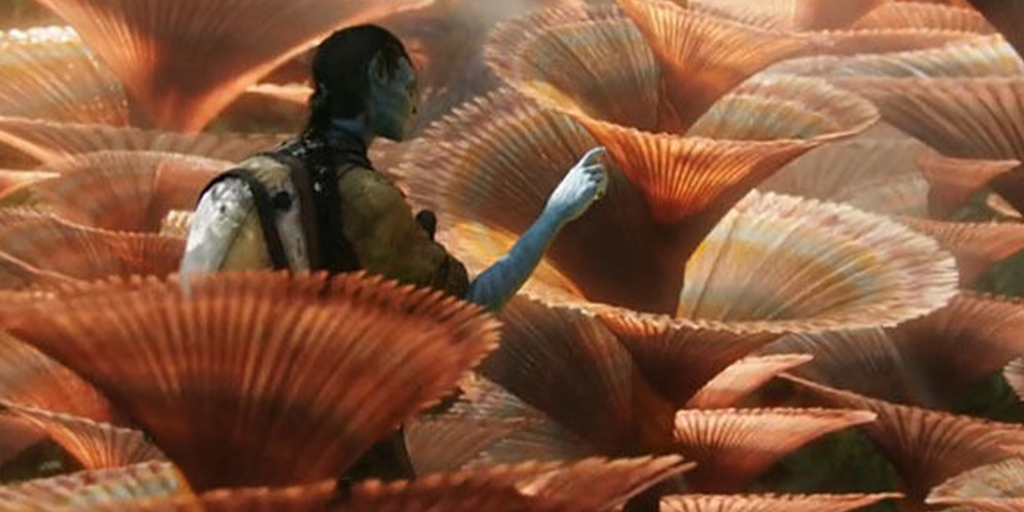

*This distinction is similar to the difference between Tulkun Ethics (intrinsic—no harm) and Payakan Ethics (instrumental) in my article, “The Ethics of Payakan.”
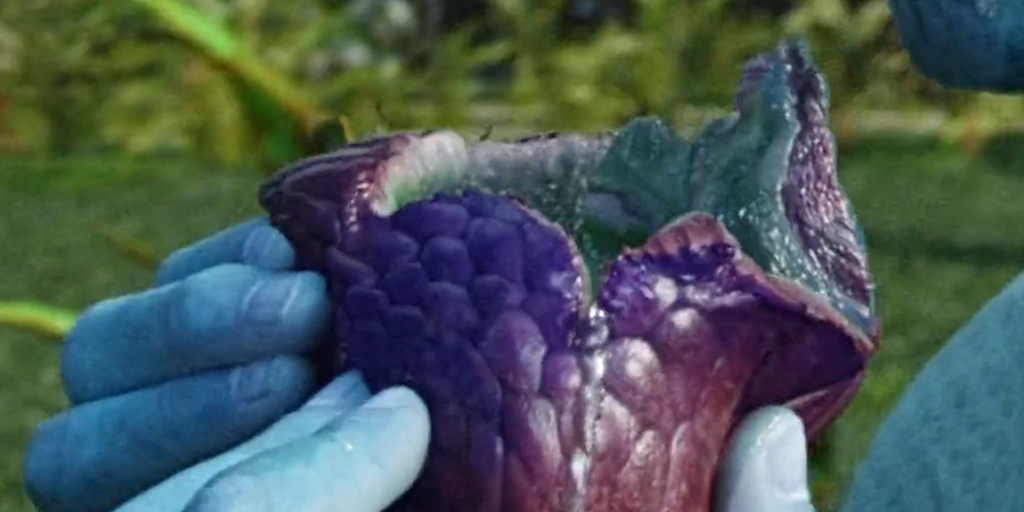
But one might think (and I believe one should think) that this distinction remains incomplete. This is because nature is not just made to be untouched. Plains of grass are meant to be stepped upon, thus benefitting humans; fruits are meant to be eaten, thus benefitting humans and na’vis; direhorses and banshees are meant to be tamed, thus benefitting na’vis. A na’vi is also ready to become a warrior once they make a clean kill but they pray over the animal—a viperwolf in the case of Jake in Avatar (2009).
Of course, it is also true that nature is not just made to be undone (i.e., destroyed).
Thus, we can say that the distinction creates two extremes: either nature is meant to be untouched (intrinsic value approach), or that nature is meant to be undone (instrumental value approach). But there is a third, more complete, and more holistic, way.
The third way is relational value.
It considers contextual relationships between humans and nature, such as the fact that fruits are meant to be eaten rather than be left alone (and be quite useless), but not all things are meant to be eaten, like flowers. It also considers the fact that the planet is meant to be inhabited but not meant to be degraded, otherwise it would destroy both the planet (nature ecology) and the people (human ecology) living on it.
So, part of relational value has to do with purpose, such as the purpose of fruits, which to be consumed as foods, or the purpose of grass, which to be treaded as paths.

But this is not the only way humans see nature. There is indeed another way that is also relevant to our discussion of Pandoran eco-theology, namely, the distinction between creation vs. environment.
3. Creation vs. Environment
In Orthodox eco-theology, this is a significant but overlooked distinction according to Elizabeth Theokritoff:
- Creation is nature in relation to God
- Environment is nature in relation to humans
Most discussion on ecological ethics only cover the latter (by which humans are the center of ecology), but if we study any religious tradition, specifically indigenous cultures and thus na’vi cultures, we must cover the former.
In Catholic eco-theology, according to Joseph Ratzinger: belief in the Creator Spirit is essential to understand that one cannot subdue and abuse the world but see the world as a created gift. The world began as a garden and should never become a wasteland. We are not made to dominate the world but to garden the world, as na’vis do.
The world began as a garden and should never become a wasteland.
Now, in na’vi eco-theology, belief in the Great Mother is essential to understanding the same. While the eco-theology of Orthodoxy and Catholicism is monotheistic (related to one God), that of Pandora is pantheistic (related to the world as God or manifestation of God).
All people, animals, and things belong to Eywa, and all energy is borrowed from Eywa. But Eywa is not “strictly” impersonal: one prays to Eywa, and Eywa listens. Eywa has a will, and tsahiks listen.
In this sense, Eywa is not only pantheistic but paganistic (and I don’t mean that in a derogative sense but religious sense)—thus being the subject par excellence in James Cameron’s eco-theology.
As we’ll see more and more, Eywa gives a firm and unique sense of purpose, meaning, and value to her children and their home. However, as we’ll also see, this is not only limited to Pandora but applicable to Earth.
Next, in Part Two, we’ll explore two aspects of eco-theology, dedicated in Sections 2 and 3 (which corresponds to nature ecology and human ecology respectively):
- Sacrality: Mother Nature and the being of Eywa
- Technology: Manmade Nature and the crises of Earth
Then, we’ll close with Section 4, which is the marriage between #2 and #3—typified by Eywa and Grace, and conjoined in Kiri—and its relevance to our world and ourselves today.
Click here to read Part Two.

 PANDORAN PHILOSOPHER
Leave a comment