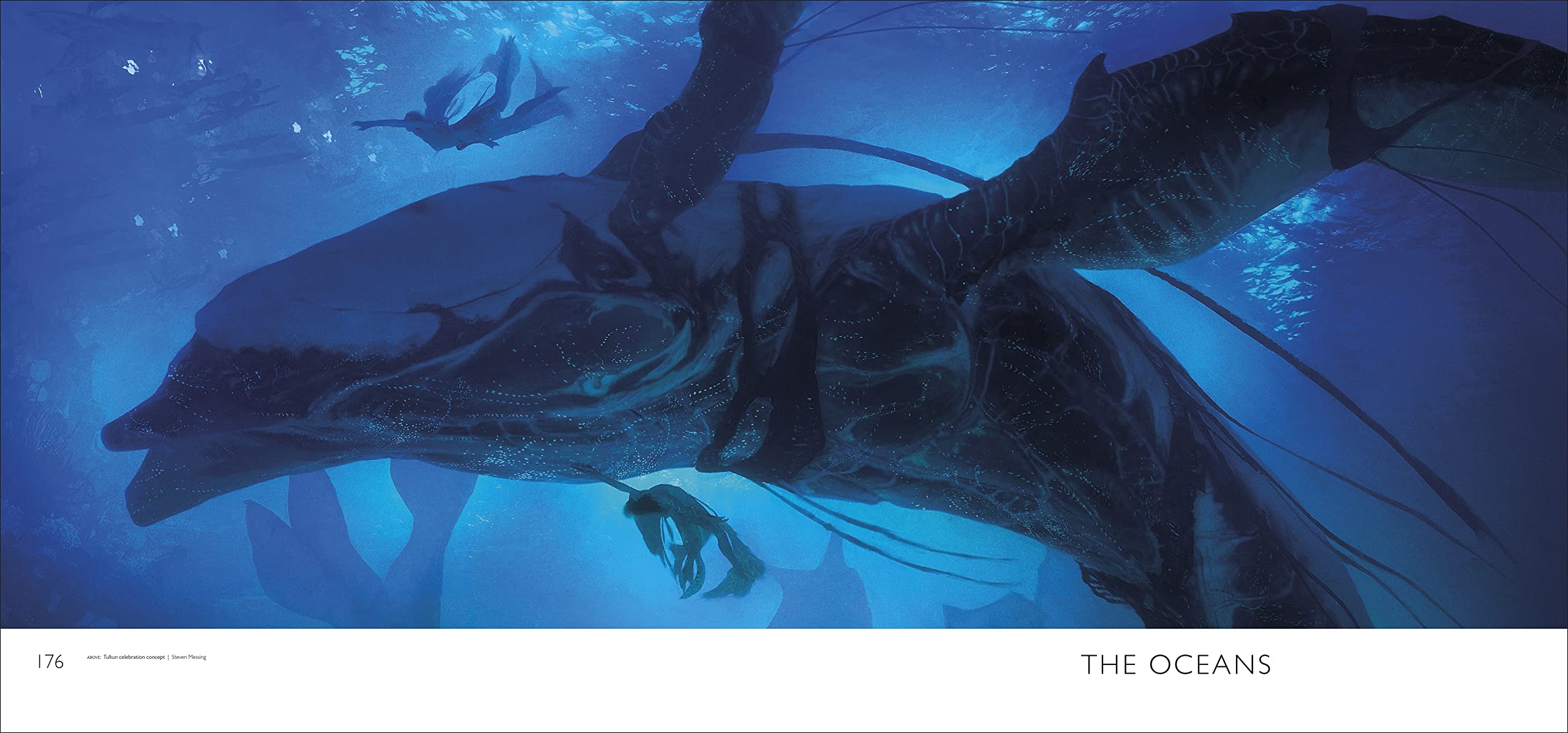
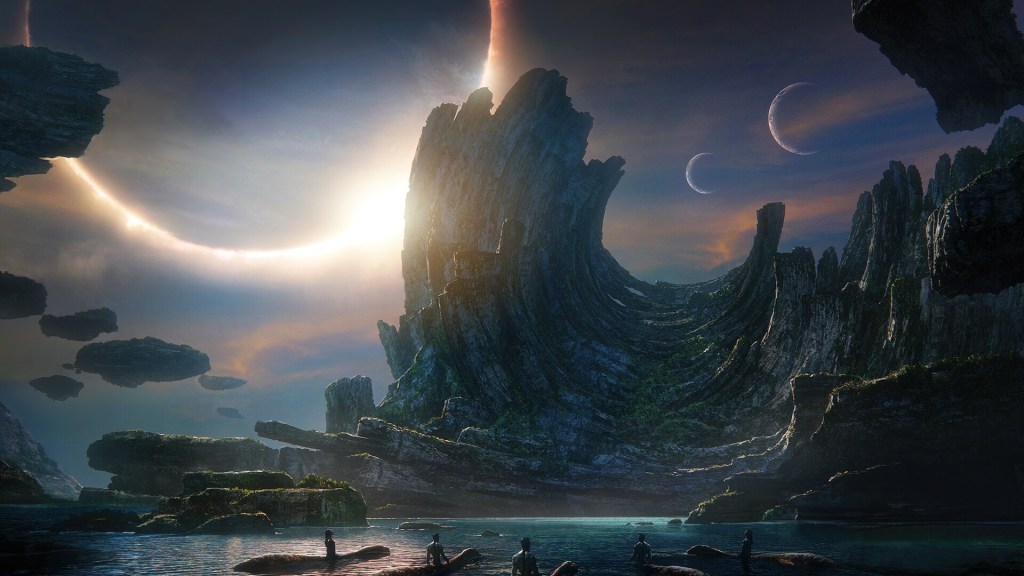
Did you ever notice that The Way of Water features three eclipses?
The eclipse is a new image and motif brought into the Avatar universe by James Cameron, and it is not just an aesthetic or incidental choice. In fact, the indigenous and religious traditions that inspired the na’vi have fascinating mythologies about eclipses.
Let’s explore this motif of eclipses in Avatar, then compare it with eclipses in world mythology, and finally, unpack the insights about the na’vi and human minds from how they view eclipses.
Eclipsed by Polyphemus
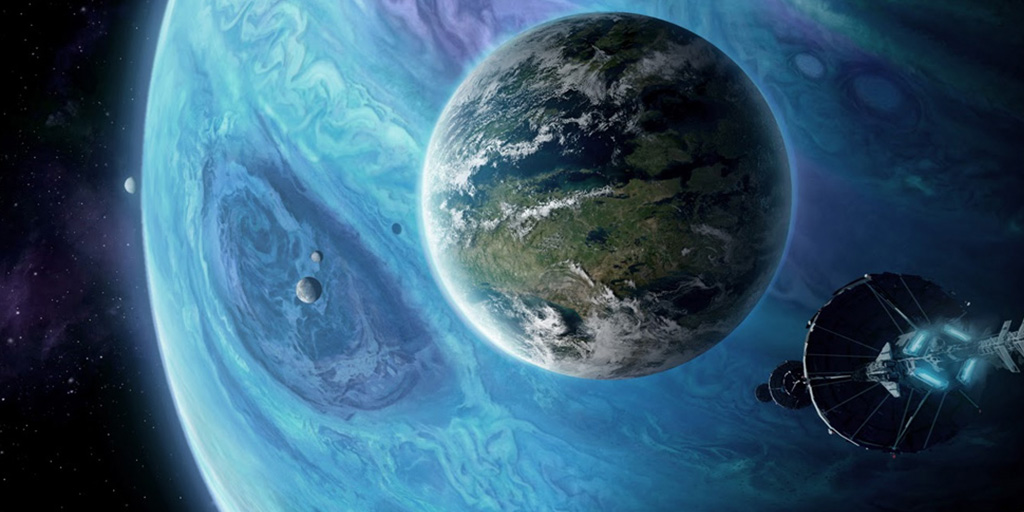
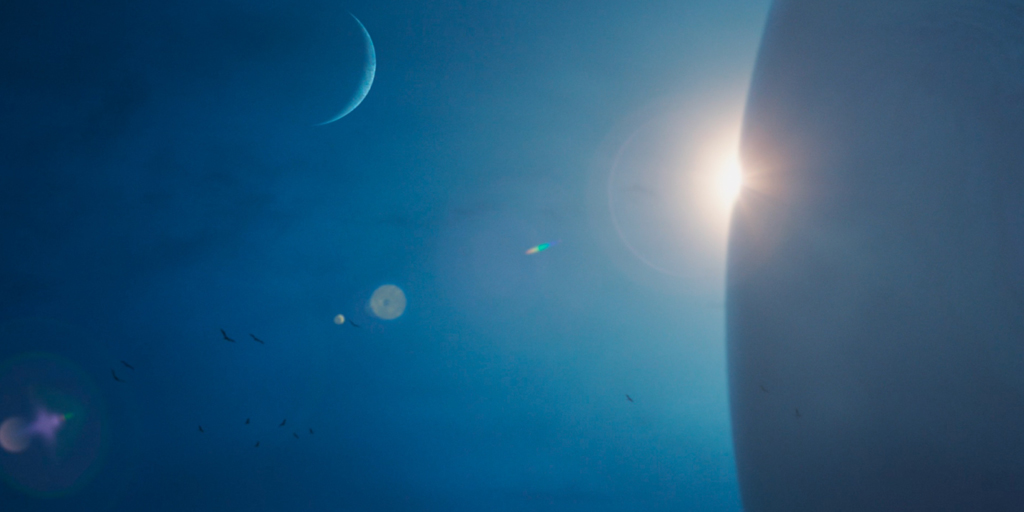
Polyphemus is the blue giant planet that eclipsed the sun and is orbited by Pandora. Its namesake, Polyphemus, is known as the Greek cyclops who devoured men in Homer’s Odyssey and was blinded by fire. And eclipses are known to be devouring—or stealing—the greatest fire known to both gods and men: the sun.
The sun was eclipsed three times in The Way of Water, at which these events occur:
- The capturing of Spider
- The seizure of Kiri
- The death of Neteyam
All three, as you can tell, are disastrous events.
#1 is the beginning of “a son for a son” narrative, as #3 closes that narrative in the loss of Neteyam and gain of Spider.
And #2 is a separate arc, namely that of a mother (or mothers, if we include both Eywa and Grace) and daughter. The scene where Kiri met her mother through the Great Mother in the Spirit Tree implies an interesting tension: the eclipse is seen as a positive interval by the Metkayina villagers to commune with Eywa, but the eclipse is a cautionary alert, or even a negative omen, by the Omaticaya children in the story.


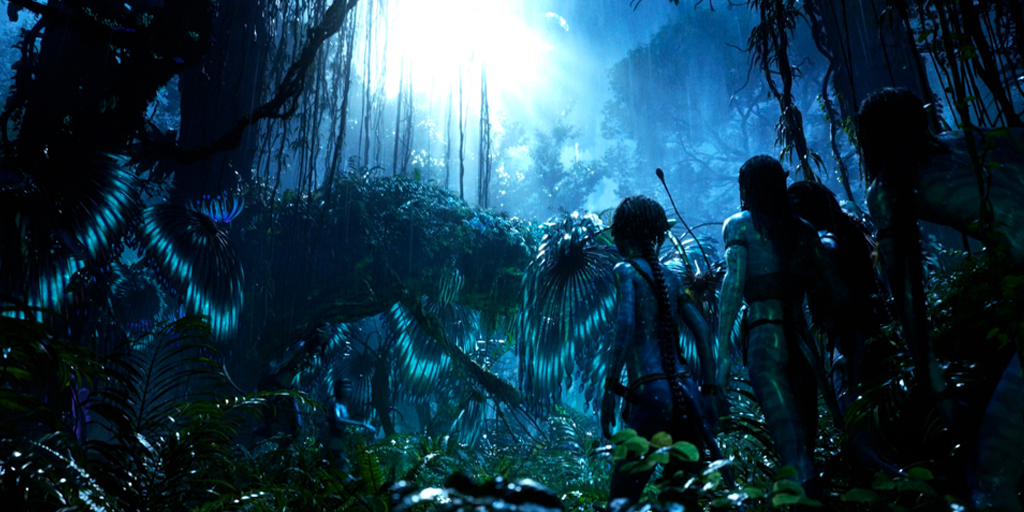

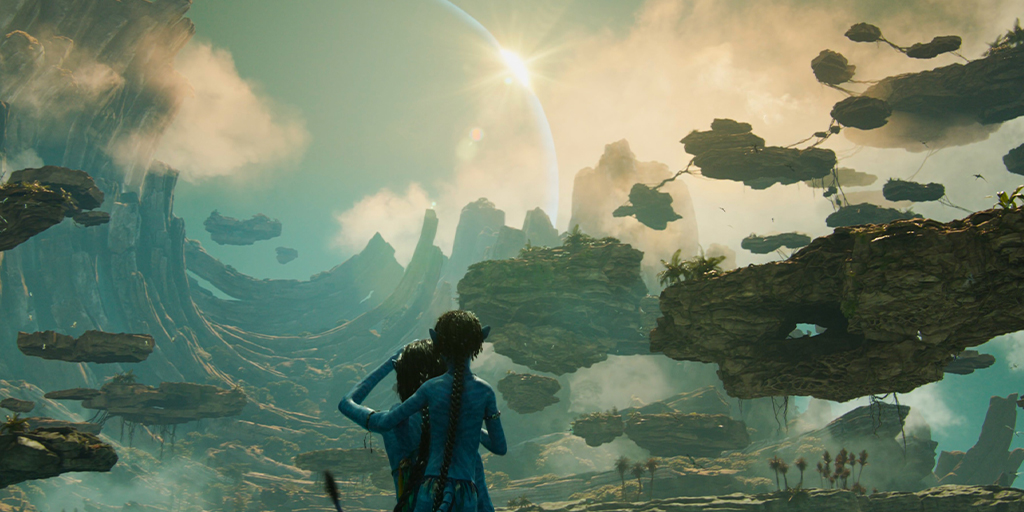
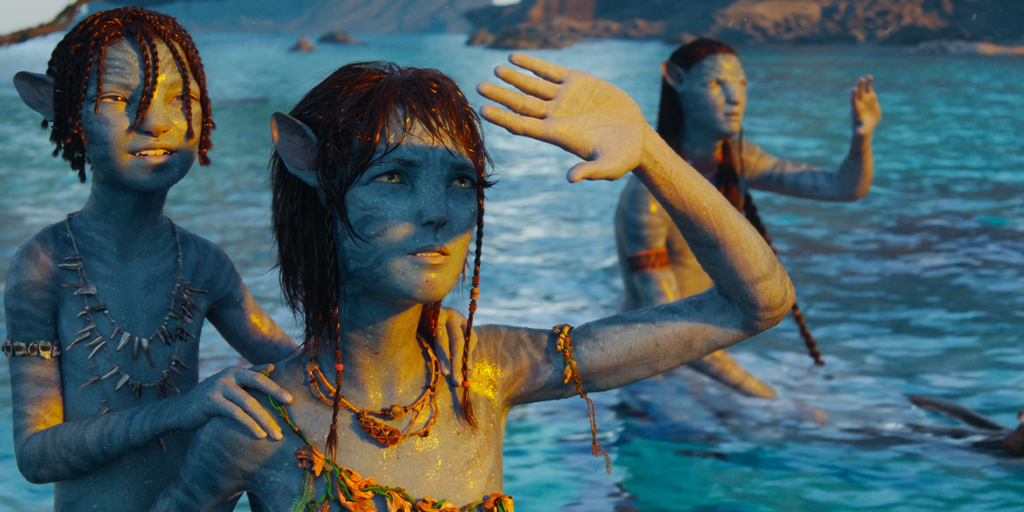


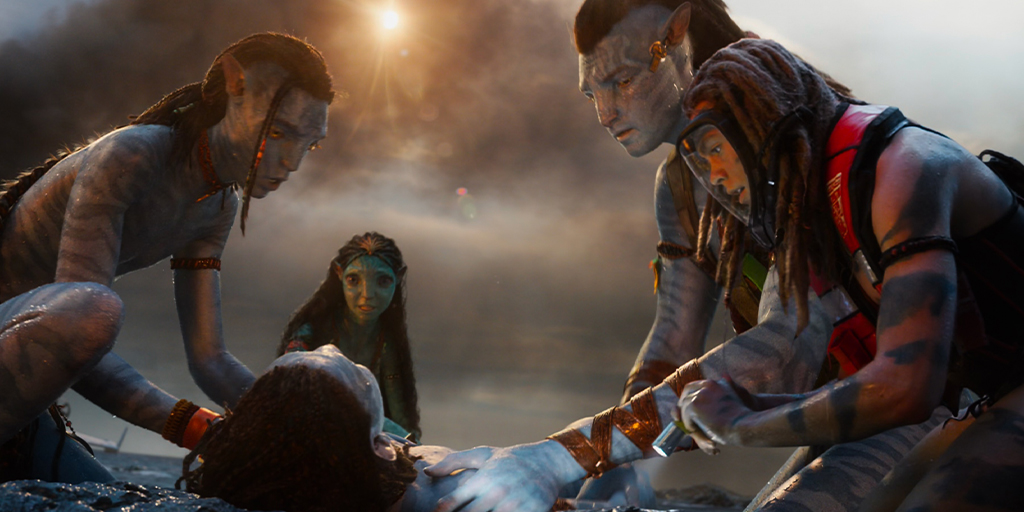
The Sully children needed to be home by eclipse, as noted by Tuk in the Hallelujah Mountains, and the children and their parents experienced the worst losses during eclipses.
This made me wonder: what is the meaning of eclipses?
Turns out, in our own human history, eclipses are no foreigner to disasters. They are even known as cosmic interruptions. It seems like The Way of Water acknowledges the same.
For now, let us compare and unpack surprising insights from the phenomenon of eclipses as seen by human vs. na’vi cultures.
World Mythology
To my delight, there are many cultural attitudes and mythical narratives on eclipses, particularly total or solar eclipses. A solar eclipse is when the sun is completely blocked out, just as what happened in The Way of Water. In contrast, a partial eclipse is when the sun is not completely blocked out. Since our moon is 400x smaller than the sun but 400x closer to the earth than the sun, our moon can “devour” the entirety of the sun.
In fact, the greatest metaphor (and horror) about eclipses in world mythology is the phenomenon of devouring the sun. And what comes of this are cosmic interruptions.
The greatest metaphor (and horror) about eclipses in world mythology is the phenomenon of devouring the sun.
Let’s briefly explore 7 of these myths from around the world, including European, Asian, African, and American regions.
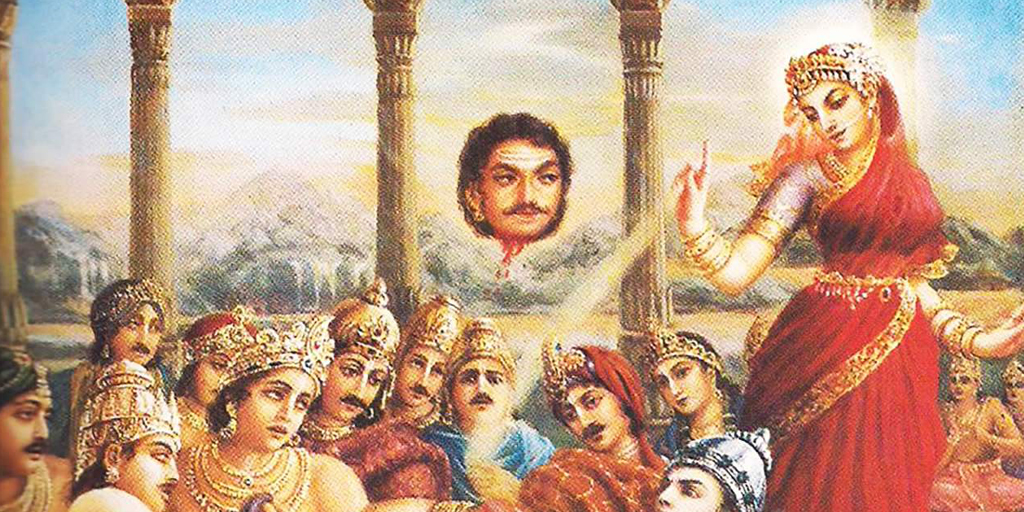
1. Hindu
A demon named Rahu wanted Amrita (the elixir of immortality that became the namesake of the yellowish substance of Tulkuns) but was decapitated. So, what happens in a solar eclipse is that his floating head swallows the sun until it couldn’t hold it anymore because he has no throat. This image makes sense because as the moon slowly covers the sun, it’s as if the sun is being bitten until it’s completely consumed. And the reappearance of the sun is like a regurgitation from Rahu.
2. Chinese
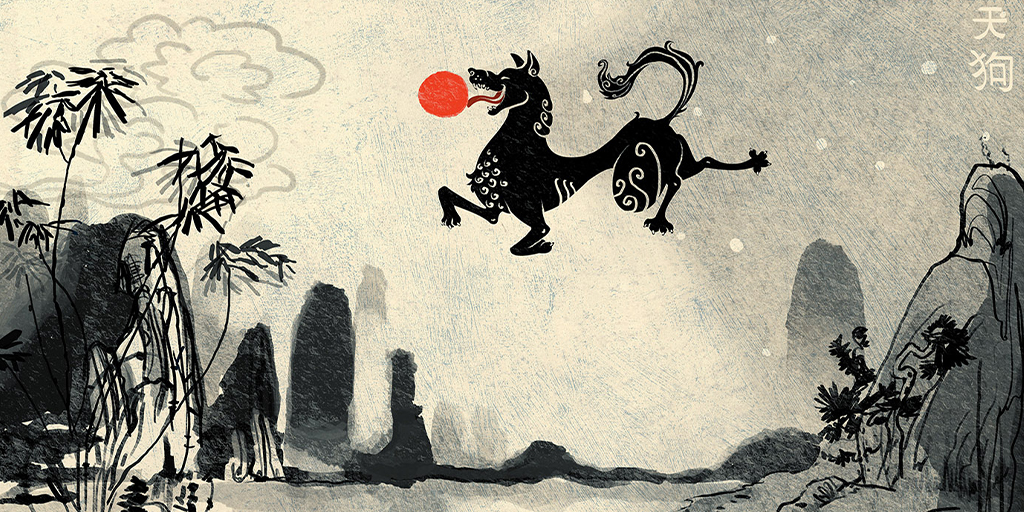
Like Rahu, dragons would eat the sun. But because they are not floating heads, the sun would not come out through their throats but from their mouths. The dragons vomit it because either the gods would shoot arrows at them or humans would make loud noises from drums to frighten them. In any case, the Chinese word for eclipse (“shih”) means to eat.
3. Nordic
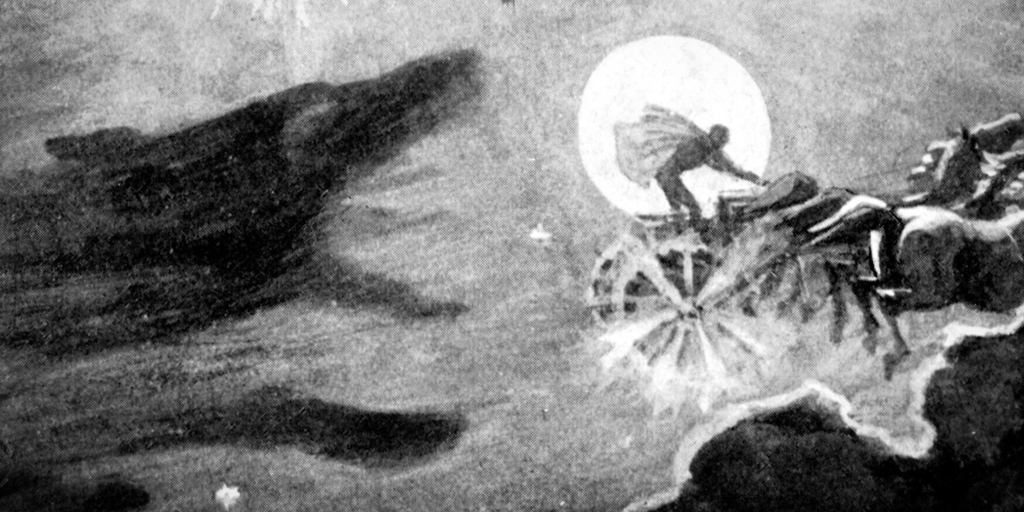
Like the Hindu and Chinese myths, the Nordic myth also involves physical beings in eclipses. This time, we have two wolves: Hati and Skoll. One tries to catch the sun while the other to eat the moon. If they both succeed, then Ragnarok or apocalypse would happen. However, like the Chinese, humans would also make noises to frighten them.
4. Native American – Choctaw
Like the Norse, an animal would gnaw on the sun but would be frightened by humans. In the case of Choctaw people, the animal would be a little black squirrel.
5. Greek
We’ve had demons and predators. Now we have gods. The Greeks see eclipses as a sign that the gods are angry with humans, and that disasters would happen. Even the Greek word for eclipse (“ekleipo”), where we get the English word, means abandonment.
6. Egyptian
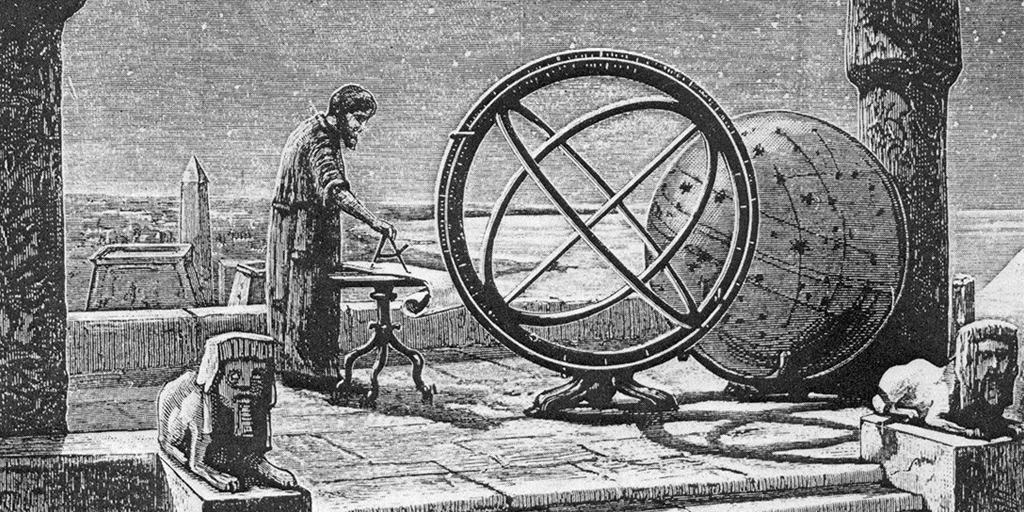
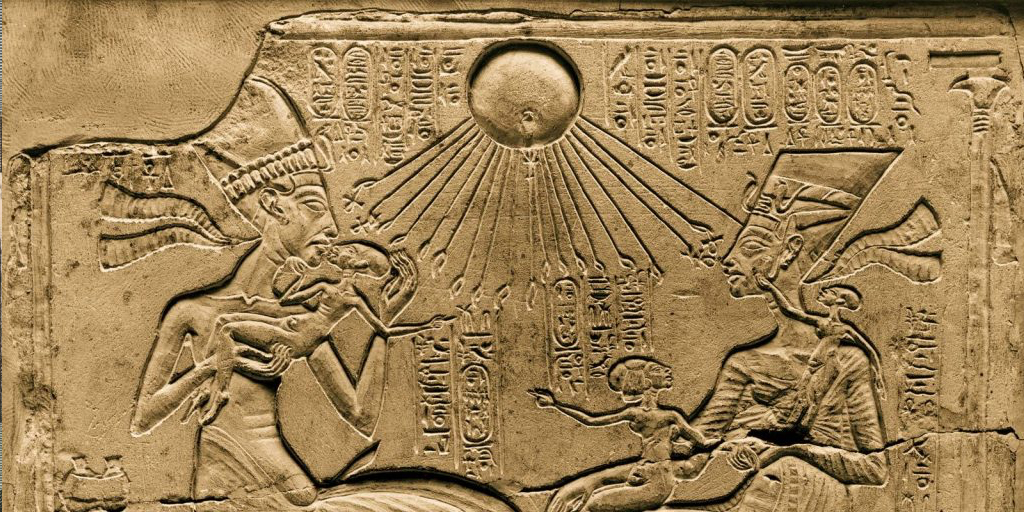
Unlike #1-5, we actually and surprisingly don’t have detailed accounts of eclipses from Egypt. But we do know that sun worship is prevalent, and their astronomers must’ve observed eclipses. Scholars have argued for three possible explanations for this mystery:
- The Egyptians were too disturbed or terrified and did not write any manuscript about the eclipse to prevent tempting the sun god, Ra.
- The Egyptians did write about eclipses but in the form of metaphors (such as blindness, darkness, etc.), which are part of manuscripts written when historical eclipses happened.
- The Egyptians lost the papyrus manuscripts.
7. Aztec
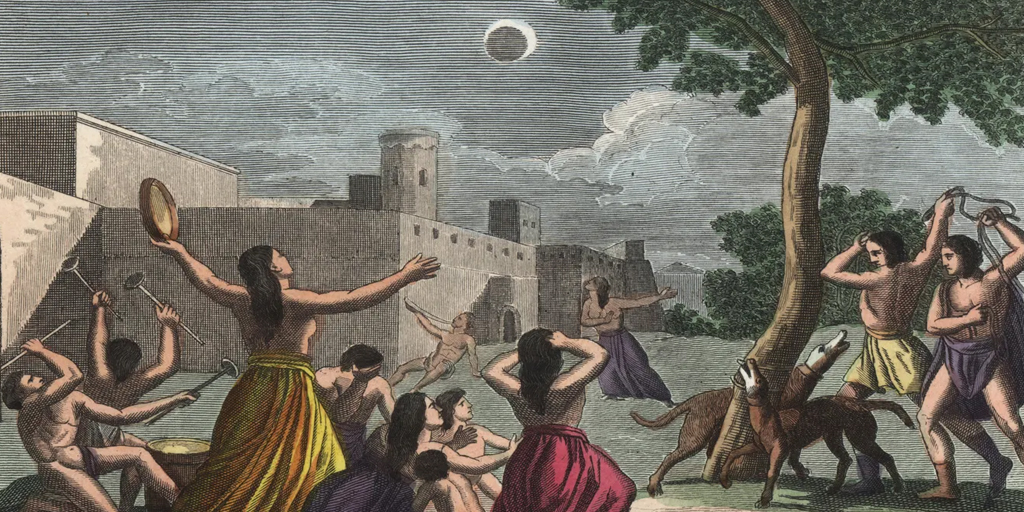
I will end with a description from a 16th century manuscript that—unlike the Egyptian manuscripts or lack therefore—explicitly described the cosmic phenomenon and human reactions surrounding a total solar eclipse:
There was a tumult, and disorder. All were disquieted, unnerved, frightened. Then there was weeping. The commonfolk raised a cup, lifting their voices, making a great din, calling out shrieking. People of light complexion were slain as sacrifices; captives were killed. All offered their blood. They drew straws through the lobes of their ears, which had been pierced. And in all the temples there was the singing of fitting chants; there was an uproar; there were war cries. It was thus said: “If the eclipse of the sun is complete it will be dark forever. The demons of darkness will come down. They will eat men!”
Florentine Codex
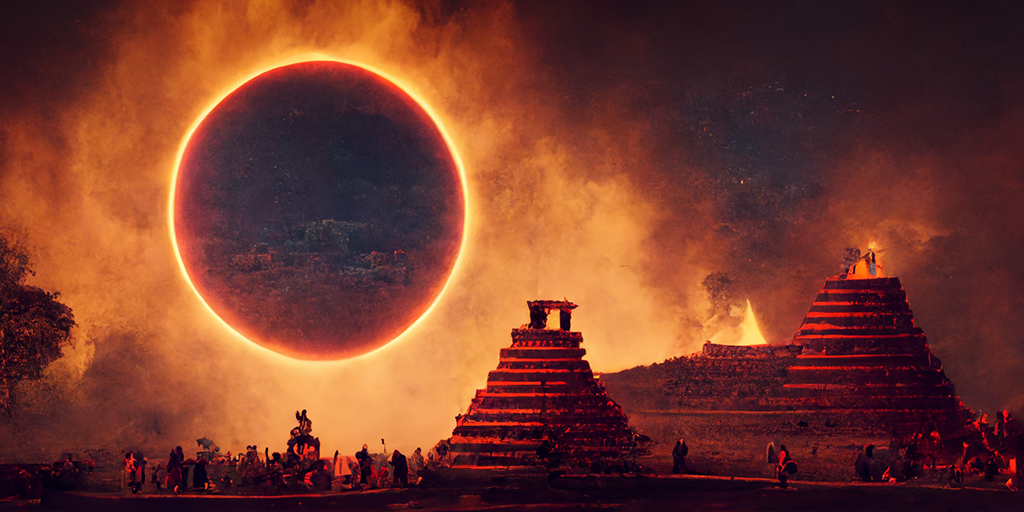
In short, the sun was “devoured” by predators, demons, or gods. But why this hysteria and superstition? Why sacrifice the innocent? Why does this matter?
To understand the motivation behind these narratives, which may give us insights about the world and clues about Avatar’s usage of eclipses, we must understand the grand telos (ultimate purpose) of what we take for granted: the sun.
Here Comes the Sun
In the pre-modern world, there is a way to fight death and become immortal (excluding the afterlife). It is to survive oneself and one’s blood.
And to succeed, one must preserve and nourish both genealogy and fertility. Genealogy “immortalizes” one’s bloodline and legacy while fertility keeps everyone alive and well. And here, one needs the most obvious and essential resource: the light, energy, and warmth of the sun. The power of the sun is *the* power that brings forth life. It brings forth the food to eat and the heat to live.
The sun is the enemy of winter, the benefactor of agriculture and habitation, and without it, it’s the end of the human race. Without the sun, it’s the same as apocalypse—doomsday.
So, when the sun is totally eclipsed, which is horrific and very rare, one fears impending doom. This is especially true when civilization had only a few decades of life expectancy and faced both plagues and warfare. In societies like these, it is no wonder that eclipse seems to be the mischief of predators or the wrath of the gods.
The sun is “divine” not only because it is the largest celestial sphere and have divine-like qualities of enlightening and nourishing life.
But the gods are also associated with the sun. The sun is “divine” not only because it is the largest celestial sphere and have divine-like qualities (or rather, gods have sun-like qualities) of enlightening and nourishing life. It is also crowned upon the heavens. The sun is the highest, largest, and brightest thing in the known universe.
With this in mind, every culture associates honorable gods with sunlike qualities. Egypt has Ra, Greece has Horus, Norse has Sol, and American civilizations have sun dances.
In short:
The basis of civilization and societies is the ability of humans to cultivate crops to grow their own food and the ability to domesticate animals for work and food. As humans learned that the cultivation of plants depended upon the sun for light and heat energy, it is certainly no surprise that ancient people started to regard the sun as a god to explain such grand power.
“Sun Worship: Gods, Symbols, and Facts”
If the na’vis don’t have Eywa, they’d probably worship the sun.
Return to Pandora

On Pandora, according to Tsireya, the eclipse is apparently the best time for connecting with Eywa at sacred places. So, in a sense, the na’vi needs momentary darkness in nature for momentary light in Eywa.
And we should not simply dismiss the human cultural attitudes and mythologies on eclipses as “silly.” They can tell us about the life-giving cosmic star that perpetuates humanity and our every second.
The also tell us about how a great terror and wonder it is to experience “midday into black night” from a total solar eclipse.
But there might be an explanation as to why the na’vis do not fear but rather embrace eclipses. Perhaps Pandora is an Eden (at least the Forest and Reef habitations in the first two movies), at which the planet is gentle, and famines and warfare are rare. Plus, their deity, Eywa, is physically close and spiritually intimate. And She is religiously not associated with doom but with life.
The way people have interpreted these astronomical events [like total eclipses] goes hand in hand with the beliefs in their culture… In places where there’s a gentler environment, no extremes in weather, and food is abundant, your gods are likely to be kinder and so you see things in different ways. But if you live in a fearful religion where the gods are out to get you then you’d have more of an inclination to expect the end of the world.
“If You Think an Eclipse Means Doomsday, You’re Not the First” at BBC
Eywa exists for the life of the world.
But perhaps in The Way of Water and us (the human audience), the eclipse is tied with our cultural associations of darkness and doomsday, where cosmic interruptions and family sacrifices are bound to happen—from the capturing of Spider, the seizure of Kiri, to the death of Neteyam.
Unfortunately, we can say that our eclipse hysteria and superstition on the end of the world killed the innocent, but in Avatar: it’s not eclipses to be feared as justification for killing of the innocent and anticipation for the end of the world… it’s humans.
The Sky People can become the predators, demons, and gods, that “devour.” But we can, and should, become the opposite—which is the message and real hope of James Cameron’s Avatar.
Oel Ngati Kameie,
— Pandoran Philosopher
Appendix
Post-Eclipse: The Bright Side
The eclipse is just one part of the story. In fact, there is sneakily and implicitly a fourth eclipse in The Way of Water, and that is its ending. And the ending is not a cosmic interruption but a divine communion.
In the darkness, Jake and Neytiri commune with Eywa in the Spirit Tree and meets their beloved son. And Jake narrates that he will not run away but protects his fortress: his family. So, on the bright side, the role of the eclipse is reversed. And let’s not forget that eclipses anticipate the sun. Post-eclipse comes the light and warmth and source of life.


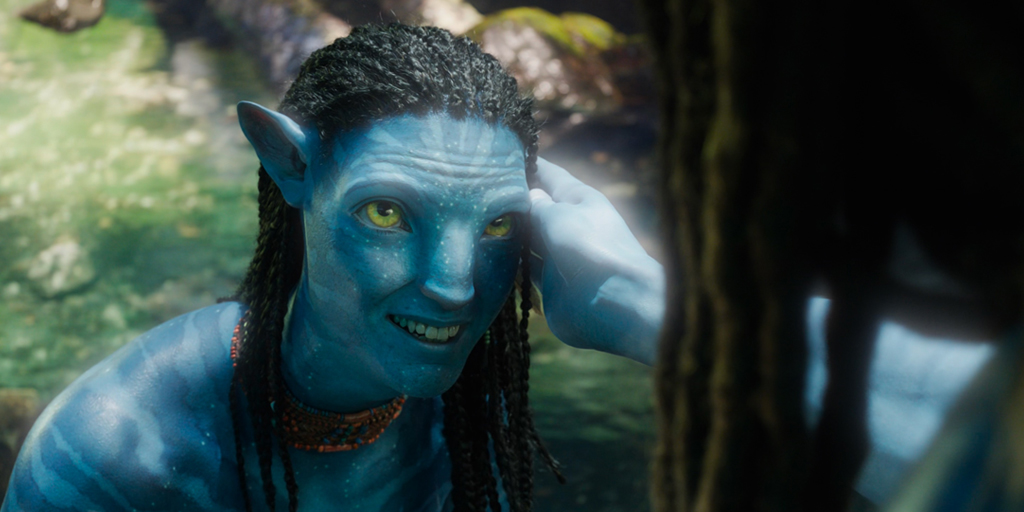

Furthermore, the sun is not the only thing in the heavens that the ancients and medievals take as divinely ordained. There are the night stars that enable navigation at sea and boast promises from above; and there are also the rain clouds by which entire peoples see as the hand of God since they enable agriculture on land.
Human survival and flourishing depend on the mercy of the weather and constellations. From this, I hope we can learn to re-see the organic whole, the grand telos, and the magnified beauty of the cosmos… as Earth is our Pandora.
Read more on Earth and human care in “Our Great Mother” and, analogously, Pandora and na’vi care in “The Na’vi Way.”

 PANDORAN PHILOSOPHER
Leave a comment