
Avatar: The Way of Water provides a lot of intrigue on the figure of Kiri, whose “conception is a total mystery.” We know that Kiri is asking the same questions we’re asking:
What does the Great Mother want from me?
Why am I different?
Who is my father?!
These questions pique our curiosity. In Avatar 2, they give us the mysteries and we do the theorizing. In Avatars 3-5, they’ll give us the answers and we’ll see how our theories fare; and we’ll all enjoy the thrill of Kiri’s revelations.
But my aim is not to dive into theories (plenty have done that), let alone speculations or solutions on the mystery of Kiri. Rather, I will provide a retrieval of the philosophy and symbolism that’s already been given us by James Cameron in the film, which centers around the Nativity of Kiri. And this is no less fascinating!
If you notice, by reading my articles or the about page: the scope of my writings is unpacking philosophy rather than unpacking hypotheses—especially ones that require a lot of guesswork. (And for the most part, my approach in these articles is not argumentation—you’ll never see a “thesis statement” around here—but exploration. The Avatar world is vast, deep, and rich, and I treat it as such).
Why Kiri?
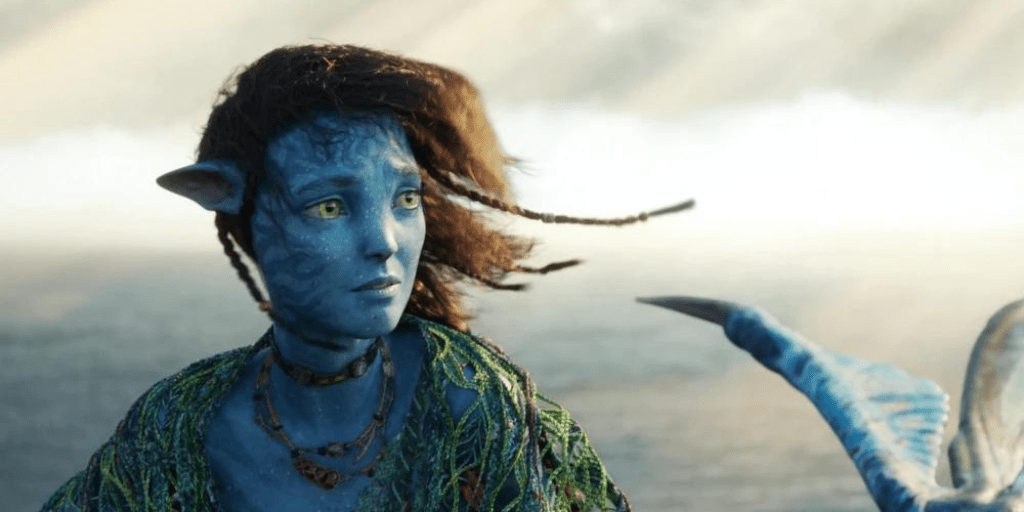
So, why write about Kiri’s mysterious origins?
- It’s an extremely obvious and one of the most fascinating mysteries provided by the movie
- It’s an entry point on what Cameron might be trying to do with the Christmas story (what is historically called the Nativity)
I must also include some word from the scriptwriters:
I don’t think we ever spoke about her specifically as a Na’vi Jesus. We set up these questions. We want people talking and thinking about these things.
Rick Jaffa
And
It’s a mystery. We can’t really talk about it. There definitely is that feeling that Kiri is undeniably, deeply connected to Eywa in the way that Grace was.
Amanda Silver
So, I am fully aware that if we unpack the philosophy and symbolism of Kiri’s origin now, we can only suggest conclusions that may be too far and too deep (so much so that the scriptwriters didn’t take that direction), but here’s why I think it still deserves some exploration:
Why Nativity?
Cameron doesn’t shy away from using Christian associations. And quite strongly.
For example, the most obvious one is Dr. Grace Augustine’s name, which is named after the most important concept in the religion (Grace) and the most influential theologian in Western Christendom (Augustine). Some have even pointed out that Eywa is a rendering of “Yahweh.” And both Grace and Eywa are the “parents” of Kiri. Some have also pointed out that Kiri’s name is a rendering of “Kyrie,” which is from the most famous liturgical phrase in Eastern Christendom.
*Other names have negative associations: Quaritch with “quarrel” and Selfridge with “selfish.”
No matter if you’re Christian or not, or pro Christian or not, there are simply many things in modernized Christianity that downplay or simplify the rich narratives and deep symbolism of historic Christianity (which is 60% of Christianity today). It will be a worthy endeavor if we leave aside our modern, religious preconceptions when we unpack the ancient, religious inspiration for Kiri’s origins and mystery—and what this may entail for Kiri’s role and identity.
*Unrelated but relevant note: this endeavor will also help us dive into the richness of symbolism and meaning-making in James Cameron’s universe and inspirations from ancient classics and indigenous traditions.
So, let’s begin what I call our reimagining of the Virgin Birth. It’s worth retrieving this story (that perhaps we’ve heard too many times, causing it to lose its meaning, or so commercialized that we don’t know its meaning) to help us understand Kiri. And help us have fun theorizing about Kiri on our own, and how Cameron is perhaps on to something by alluding to or borrowing this story. The story could just provide fascinating symbolism and nothing more—or quite the opposite—but this exploration can teach us about retrieval of ideas and philosophy of symbolism.
The Nativity of Kiri
The Virgin Birth is both a strongly Christian and Islamic tradition, signifying the marriage between the human and divine. In both cases, the Virgin Mary gives birth to the Messiah, the Christ (which is not a last name but a title).
In fact, notice a striking similarity with The Way of Water:
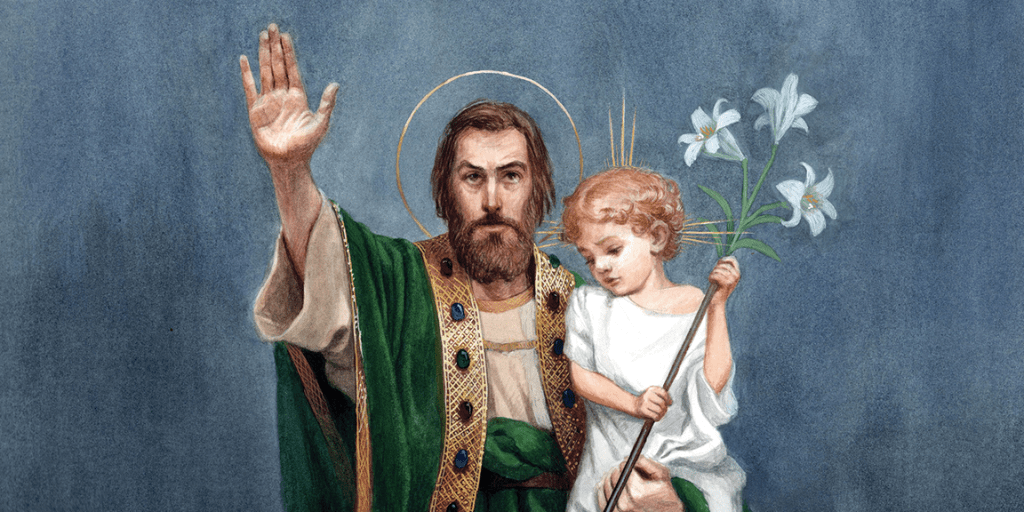
The legal father of Christ, or Joseph, received the accusation that he has an illegitimate child (born of another man); and the adopted daughter of Jake, or Kiri, received the accusation that she is an illegitimate child (born of Norm).
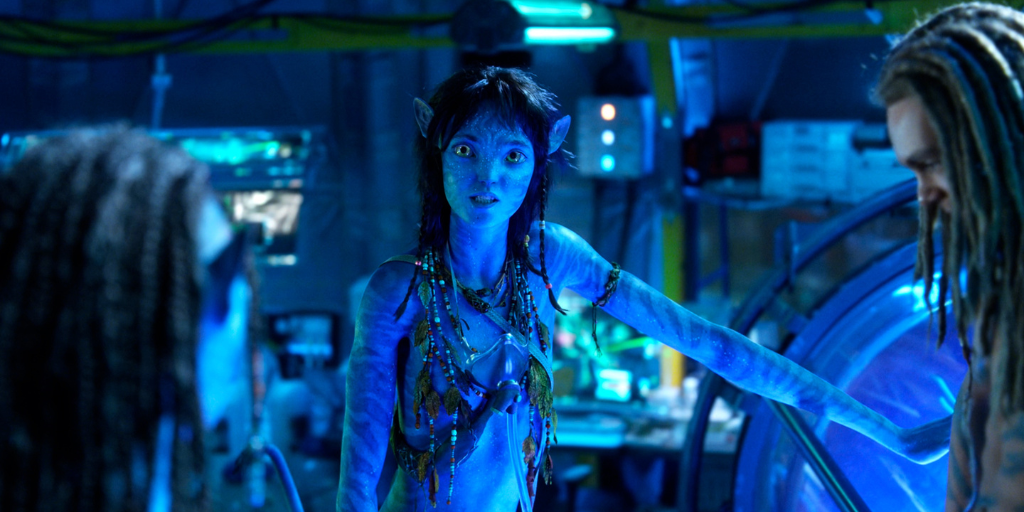
But this theory that Norm is her father is considered weak because
- Jake would’ve known if Norm and Grace had a romantic relationship (actually, in a deleted scene of Avatar 1, Norm had a romantic relationship with the martyred pilot Trudy)
- Norm would’ve known Kiri is his child and thus treat her—or even raise her—as his child rather than letting her be adopted by Jake. At least if he suspected his fatherhood, he would’ve asked for a DNA test
In any case, Kiri is mystically conceived. The fanbase suggested that she was conceived (due to her age being identical as the years humans were exiled and returned to Pandora) during Grace’s mind-transfer process under the Tree of Souls in Avatar 1. There, the human Grace was dying, and the avatar Grace was sleeping—then rendered brain-dead.
*Fun fact: this has led some to perceive Kiri not as a recombinant of Grace (for recoms have memories of their past selves) but as a reincarnation of Grace (for persons do not have memories of their past selves). Other possibilities include she is the incarnation of Eywa—or simply but uniquely the child of Eywa.
Annunciation

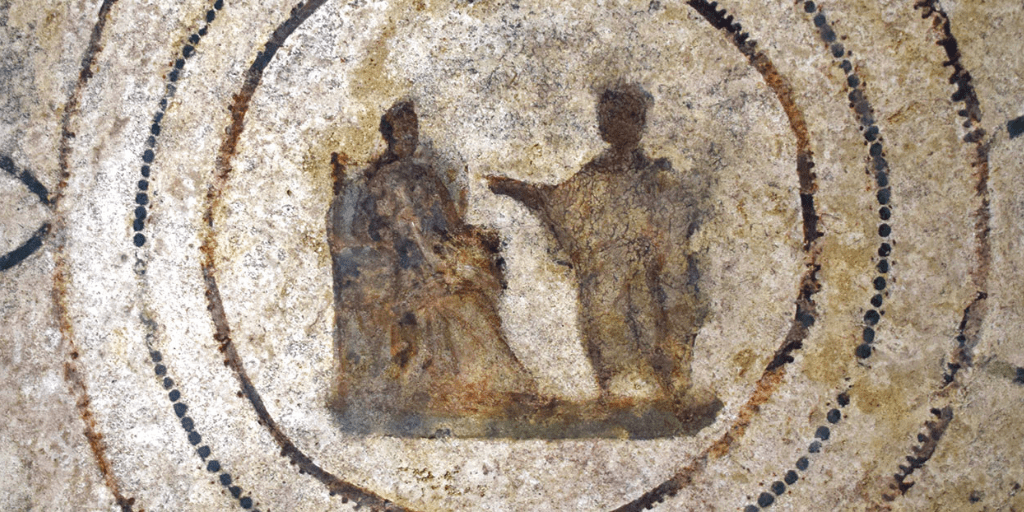
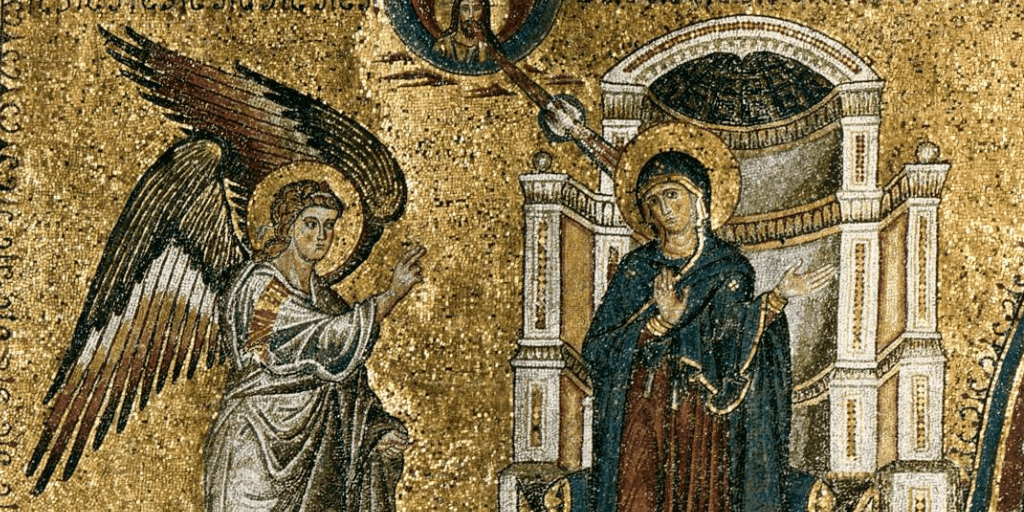
Grace under the Tree of Souls can be said to be the “Annunciation” moment, that is, when Archangel Gabriel went to the Virgin Mary to offer her to mystically conceive the incarnation of God.
Just as the incarnation of God or Christ dwelt in the Virgin Mother, the seed of Eywa or Kiri dwelt in the Virgin Avatar.
Now, is Kiri Messianic? That is a question of speculation, but we are given hints of her “messianic potential.” She is a wonderworker, she has a foot in both worlds (accused as “demon-blood” or “not true Na’vi,” her love rather than discrimination for Spider), she feels the presence of Eywa; and dare I say carry the spirit of Eywa.
But to fully unpack the mystery and potential of Kiri, let’s compare Grace and Mary.
The Typology of Mary
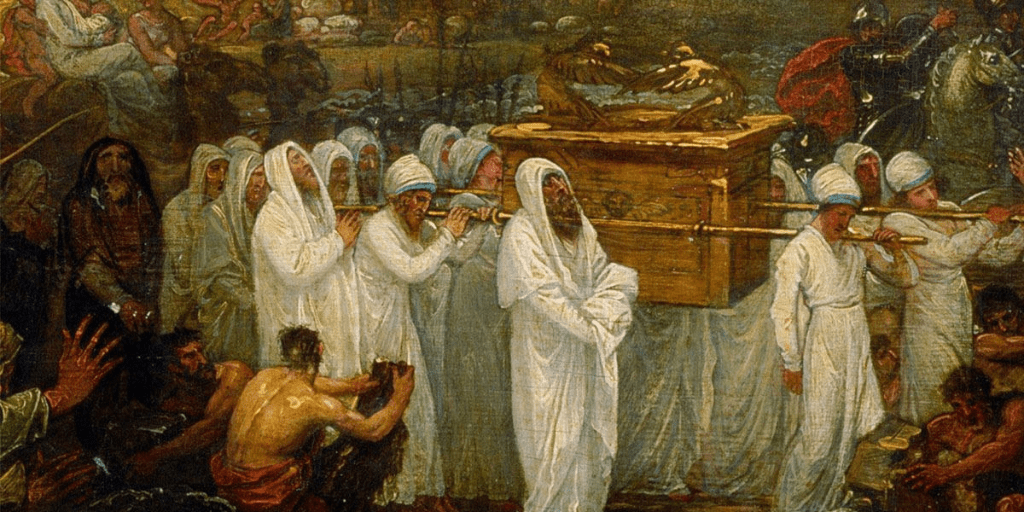
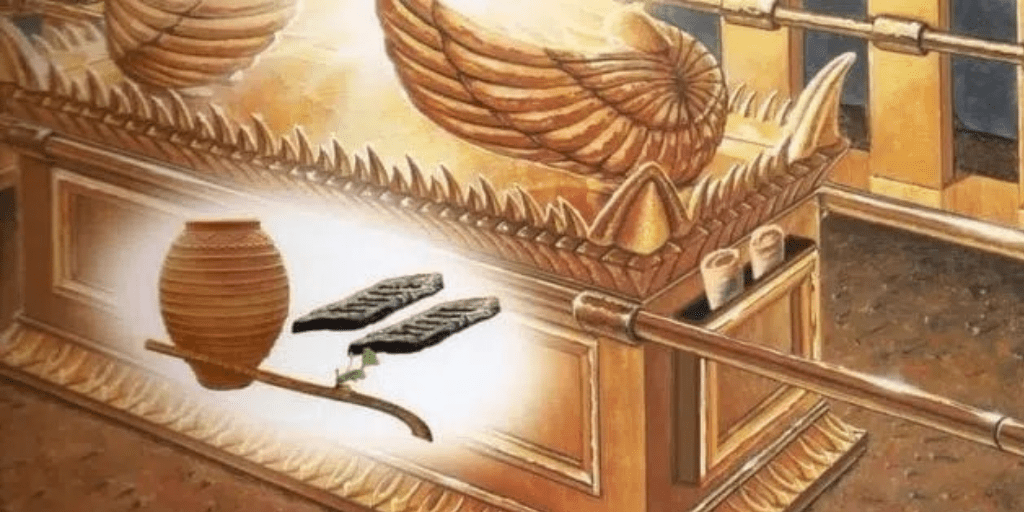
In ancient and historic Christianity, Mary is the new Ark of the Covenant. The Ark of the Covenant (pictured above, being carried) is the most sacred relic and thus must be placed in the most sacred room: the innermost part of the Temple called the Holy of Holies. But why is Mary the new Ark? Because the Ark of the Covenant is a womb. The Ark wombs three things:
- The rod of the priesthood
- The tablet of 10 commandments
- The bread of heaven
*For context: the story goes that Israelites were given priests, commands, and bread from God after being rescued from 400 years of slavery under Egypt.
Mary’s womb also carries the person who perfects all three:
- The High Priest, or the mediator between Heaven and Earth
(in the Avatar context, perhaps between Eywa and Gaia)
- The Fulfiller of the Law, or the one who fulfills the commandments
(perhaps the Three Laws of Eywa)
- The Bread of Life, or the giver of life
(perhaps Eywa Herself)
So, the Virgin Mary is not a type of the Ark of the Covenant, but rather the opposite. The Ark of the Covenant is a type of the Virgin Mary. She is the real thing.
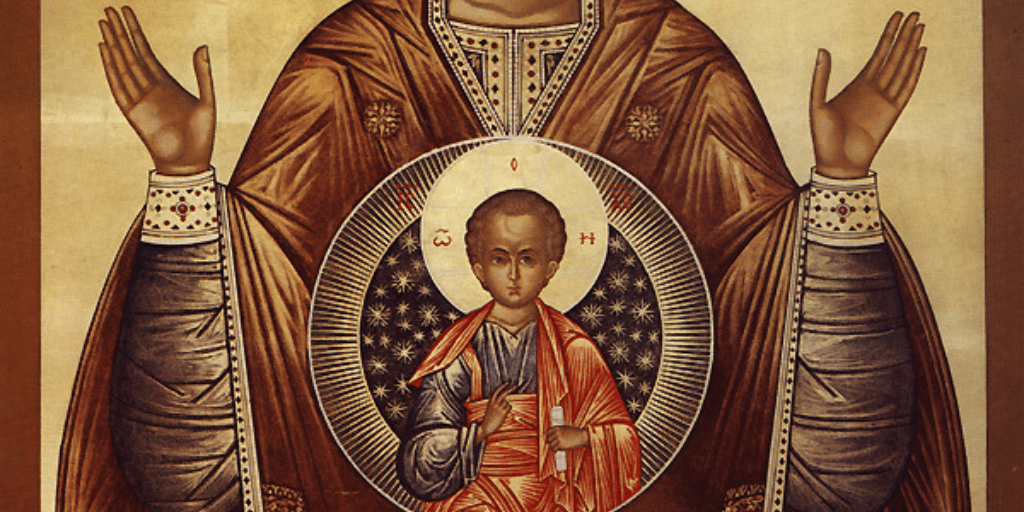
Modern vs. Pre-Modern
Now, in the modern world, Scripture has changed from having an “infinite forest of meanings” to becoming a text that only requires a “simple reading.” Thus, it reduces the multilayered nature and artistry of the Scriptures greatly celebrated by ancient and historic Christianity. And this is because non-sacramental and modern Christianity treats Scriptures more like science than story, an approach that originated 500 years ago during the rise of rationalism, industrialization, and skepticism in the West.
*Sidenote: Anglican Protestantism, Roman Catholicism, and Eastern Orthodoxy, among some others, would be considered ancient and historic Christian traditions that still exist and flourish today.
While we often think of the pre-modern world as primitive or irrelevant, or even superstitious, this would do us a great disservice because ancient wisdom and symbolism saturate the world with meaning. This is true in the case of the Na’vi. While science seeks to depict reality, story seeks to explore reality.
In fact, science without wisdom (which is always in the form of story) and without symbolism (which saturate the world with meaning, value, and purpose) leads to disaster. And in the case of Avatar, both lead to catastrophe for the entire human race and planet earth.
So, in retrieving and reimagining the Virgin Birth, we must also appreciate the deeper and richer reality of the Virgin Birth overlooked by commercial renditions of the plain, modernized, symbol-deficit Nativity story.
The Grace of Augustine

This section title is a play on words on both Dr. Augustine and St. Augustine (who is also called the Doctor of Grace in Latin).
In fact, before the Virgin Mary accepted the offer to mystically conceive, Archangel Gabriel came and called her “full of grace” (Luke I).
Now, “grace” is also a word that has lost its meaning, but in short, grace has to do with loving the unlovable—an unmerited favor or undeserved gift. (Perhaps we do not merit or deserve a Kiri!) It is an impossible gift.
Such a gift, in the Nativity story, will reverse the irreversible: sin, death, and powers that rule the world. These three cosmic problems “come” from Adam and Eve. But through the Nativity story: as Eve comes from the side of Adam, now the New Adam (Christ) comes from the womb (side) of the New Eve.
Furthermore, both Christ and Adam are conceived not biologically but mystically—and directly from God. And this is exactly Kiri’s narrative.
As the new Adam is a mixture of divinity and humanity (Creator Spirit and Virgin Mary), so is Kiri a mixture of divinity and humanity (Eywa and Grace).
There are “infinite forests of meaning,” including many other typologies that one can explore—such as Ark and Mary, or Eve and Mary—universally endorsed and deeply influential in the mind and life of the historic Church.
Implications on Kiri
But what about the influence in the mind and life of Kiri?
Whether she is the incarnation of Eywa (though the Great Mother is still a separate being) or reincarnation of Grace (though her memories are stored in Pandora’s neural network), we will find out in future movies.
In any case, as I mentioned in my article on Eywa, even Ronal the tsa’hik was in awe of Kiri when she played with glowing fish; and even Mo’at asked, “But who is tsa’hik?” to Kiri when she suggested a better way of healing her wounded brother. This suggests that Kiri has remarkable sensitivity and proximity to Eywa more than great tsa’hiks.
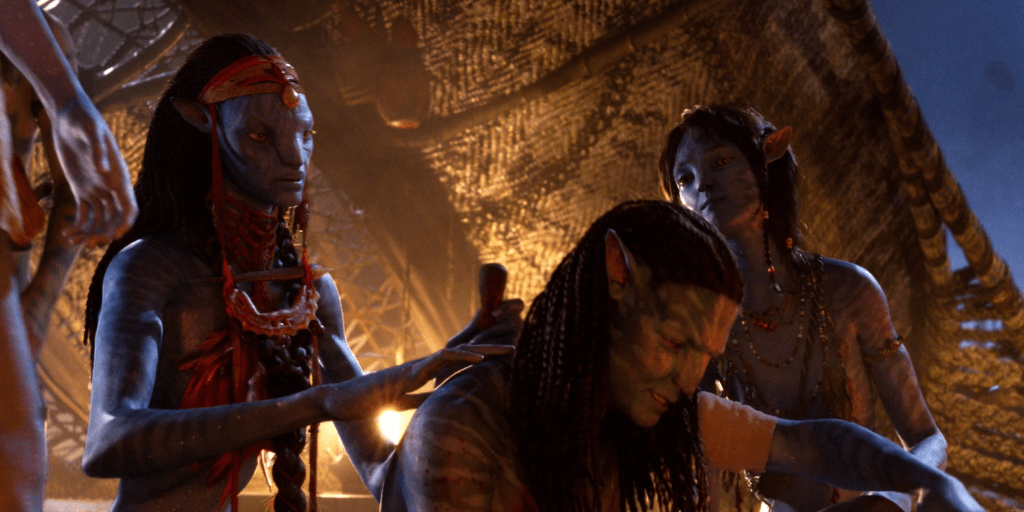

In either case, the retrieval of the Virgin Birth may give us a clue on the messianic, mediatory, or martyring role of Kiri. She may or may not be a Na’vi version of Christ (again, we’ll find out), but she shares numerous features of Christ, including some of the narrative, symbolism, and divinity of mystical origins, among other things.
For her, this will be a unique journey of self-discovery.
Self-discovery includes who she is, who her “parents” are, why she’s different (and how she’s meant to be different), what Eywa wants from her, what she can do… and thus also her burden of responsibility.
She is miraculously conceived, miraculously gifted, and we will find that she will be miraculously burdened.
What are your thoughts on how the movie portrayed the origin and hinted at the future of Kiri?
Oel Ngati Kameie,
– Pandoran Philosopher


 PANDORAN PHILOSOPHER
Leave a comment