
In my article, “Life, Death, and Immortality in Avatar 2,” I covered the difference between mind and body. The mind can be “transferred” into a body, such as an avatar, recombinant, or even Eywa’s neural network.
However, one of my readers asked whether we can touch on a third category—the soul.
In one sense, I have indeed covered the soul. In the article I mentioned, there is a view that equates the mind with the soul (which is the view I applied). But what I didn’t cover are views that are different but similar to it or oppose it, and how James Cameron’s inspirations from global traditions view the soul.
The notion of soul, in relation to mind and body, actually has many classification debates in philosophy! So, in this article, we’ll do two major explorations:
- The different views of the soul from philosophical traditions, and whether they’re compatible or incompatible with the world of Avatar,
- The understanding of the soul from global traditions and Avatar, which covers differences in #1 compared with religious and indigenous cultures.
Mind, Body, and Soul
What is the relationship between mind, body, and soul?
Here’s an introduction to a few key ones answered by philosophers:
- The mind is the *same* as the soul.
According to Rene Descartes’ classification, they are the same, non-bodily or immaterial and eternal substance, which I applied in my article. The body is the opposite. And according to Plato’s classification, which is perhaps a more familiar idea to us, the soul inhabits the body and then leaves it after death.
This view is called Dualism.
- The soul is *not* separate from the body.
According to Aristotle’s classification, souls are forms of the matter (body). The body of plants have nutritive souls, the body of animals have nutritive souls and perceptive souls, and the body of humans have both of those souls with the addition of rational souls.
This view is called Hylomorphism.
- There’s also a view that rejects the separation of mind, soul, and body. In other words, they’re all bodily or physical and non-eternal.
This view is called Monism.
So, Dualism and Monism are mutually exclusive. This means they cannot overlap, and they oppose or contradict each other. A Dualist body has a mind that we can transfer, but a Monist body has a mind that we cannot transfer. The mind and the brain are one. What is true in the Avatar world, then, is Dualism and not Monism.
And either view is compatible with Hylomorphism. It’s because Aristotle has a different conception of the soul (a form, rather than an immaterial substance).
Note: Substance in philosophy doesn’t mean an illegal chemical but essential nature. So, we’re not talking about alcohol here.
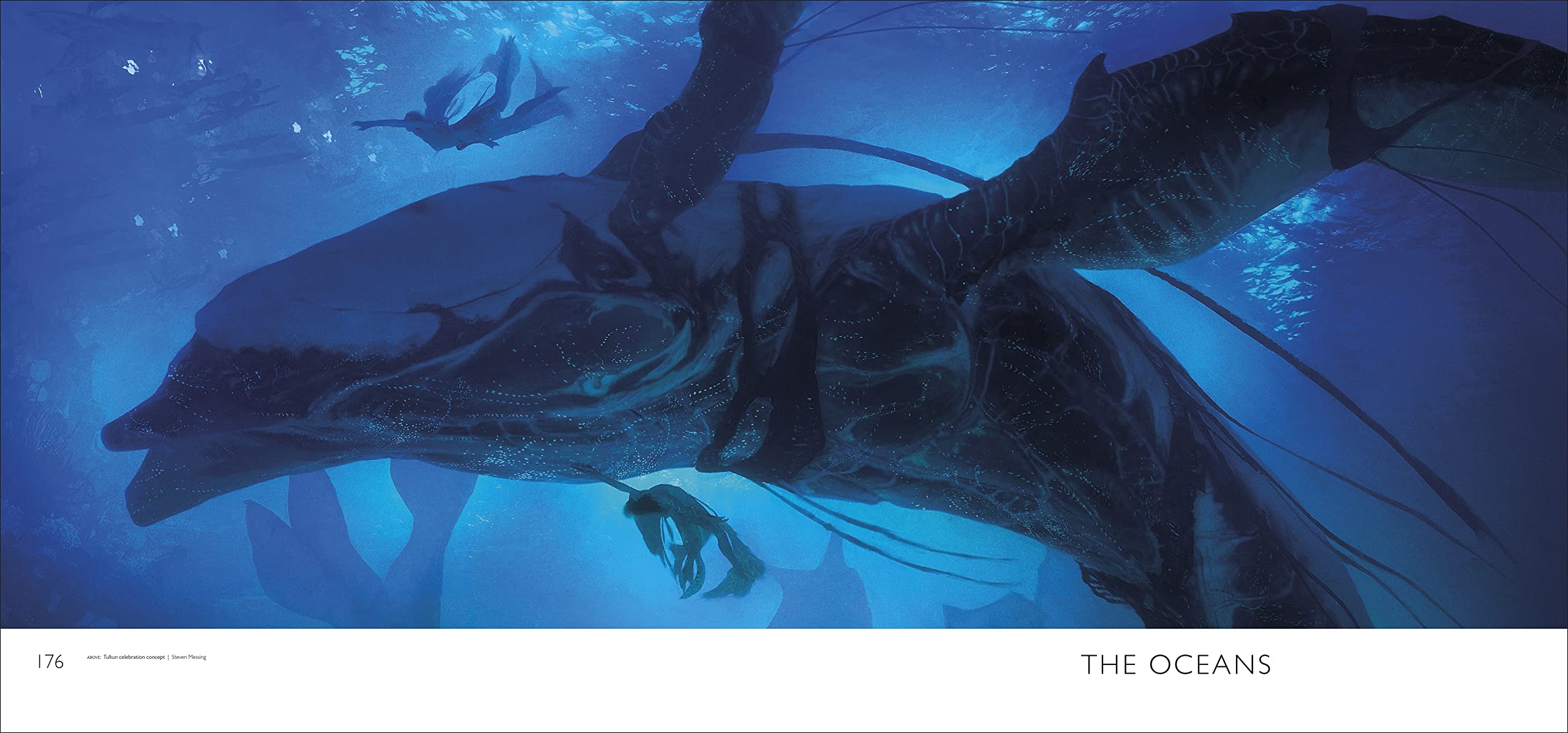
In the Aristotelian or Hylomorphic framework of the soul, Na’vis and Tulkuns have rational souls alongside nutritive (ability to grow) and perceptive (ability to feel) souls.

But what about the Cartesian or Dualist framework of the soul? While some Dualists believe that the mind or soul is an independent substance from the body (called Substance Dualism), some other Dualists believe that the mind or soul is just a dependent aspect/property of the body (called Property Dualism).
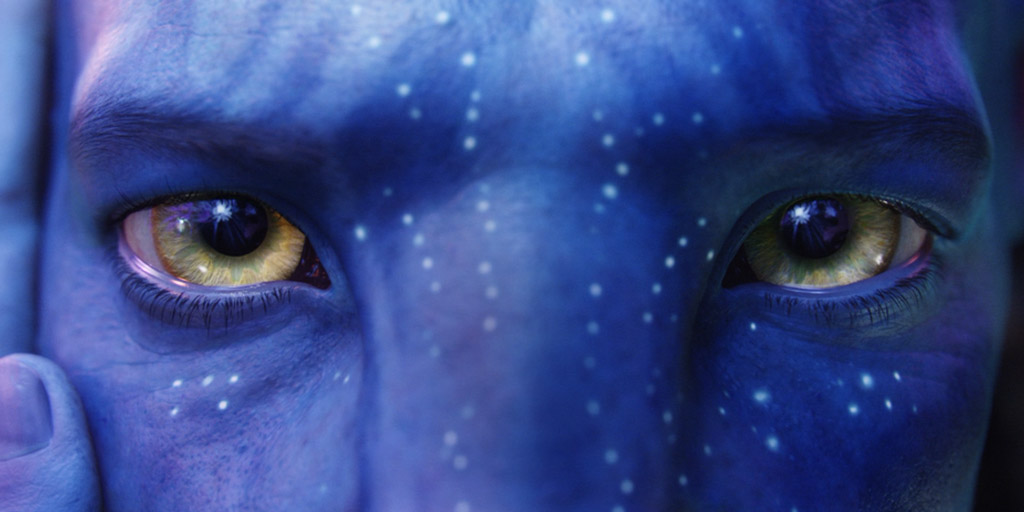
Let me apply this distinction to Avatar. Substance Dualism makes possible the mind/soul leaving one’s body to enter another body or even Eywa’s “afterlife.” If Property Dualism is true, then there cannot be avatars or recoms, or even afterlife in Eywa. Property Dualism is materialistic, or that the mind or soul cannot survive after death, while Substance Dualism is spiritualistic.
So, since Substance Dualism is true in Avatar, this opens a great deal of mystical possibilities and enriching insights about the spirituality of the soul, the connection with ancestors, and even connection with nature.
It means that the dead are never dead.
It means that we mortals are immortals.
It means that there are significant implications on the value, religious piety, and organic web of the souls of Eywa’s children.
Now, this is where we’ll explore world indigenous and religious traditions that either inspire or adhere (or enlighten) the Na’vi Way. Additionally, comparing them with the Aristotelian vs. Cartesian framework will enrich our understanding of the soul in Avatar.
Eywa’s Children
Soul vs. Spirit
This section is an additional discussion on “spirit,” given that it’s sometimes an interchangeable term with “soul.” However, one is free to skip this section, as it is a tangential exploration that clears up convoluted terms; yet it is also a beneficial exploration of “spirit” and “soul” in Avatar and beyond.
In most theologies (Christian, Muslim, Hindu, etc.), the view on the mind/soul and body is Substance Dualism. This is a Western term, which may sound mechanical or technical, so I will use the term “spirit” (which is often interchangeable with “soul”). The spirit is different from the body but includes both mind and soul, and the spirit (as the source of conscience, desire, emotions, etc.) is non-physical. But things get a little complicated:
When Jake kills a hexapede, he prays over it, and the word he uses is “spirit,” which is kind of ambiguous. Does “spirit” mean life force? Does it act as a metaphor or act of remembrance, such as when we say, my spirit is with you? Does it revolve around a departing soul who can join the souls of those in Eywa? Or, less so, departed and allocated into another body (such as in theories of Kiri’s soul—a reincarnation of Grace or even the incarnation of Eywa)?

There’s a lot of categories here, but for the sake of ease, let’s summarize our categories into the everyday usage of their words:
- Soul: transcendent entity of an individual
- Spirit: life force of an individual
- Mind: mental consciousness of an individual
In Dualism, what all three have in common is that they’re non-physical. Because they’re all similar in that they’re non-physical, sometimes their usage overlaps:
- Sometimes soul and spirit mean the same (transcendent entity), and the mind is just their mental consciousness. The first two are even in the names “Tree of Souls” and “Spirit Tree,” which gives us a sense that soul and spirit are one.
- Sometimes the soul and mind are the same (mental consciousness), and the spirit is just their life force. The mind-transfer is really a soul-transfer, which is also why Neytiri calls the souls heard in “Tree of Voices” as memories. And memory is an aspect/property of the mind.
In any case, in Avatar, all three share the same property of being non-physical and eternal. But if I’ve made some confusion, here’s a table of what’s covered so far, in terms of space-time conceptions and overlapping definitions:
| MIND | SOUL | SPIRIT | BODY | |
| SPACE | Immaterial | Physical | ||
| TIME | Eternal | Temporal | ||
| DEFINITION 1 | Transcendent Entity (Soul Definition) | |||
| DEFINITION 3 | Consciousness (Mind Definition) | × | ||
| DEFINITION 2 | × | Life Force (Spirit Definition) | ||
Here we have a table of definitions. Our discussion doesn’t have to end here, though there’s already a lot of information. However, what is more important is the ways in which Aristotelian vs. Cartesian frameworks view the soul in relation to world traditions and na’vi traditions.
Aristotelian vs. Cartesian
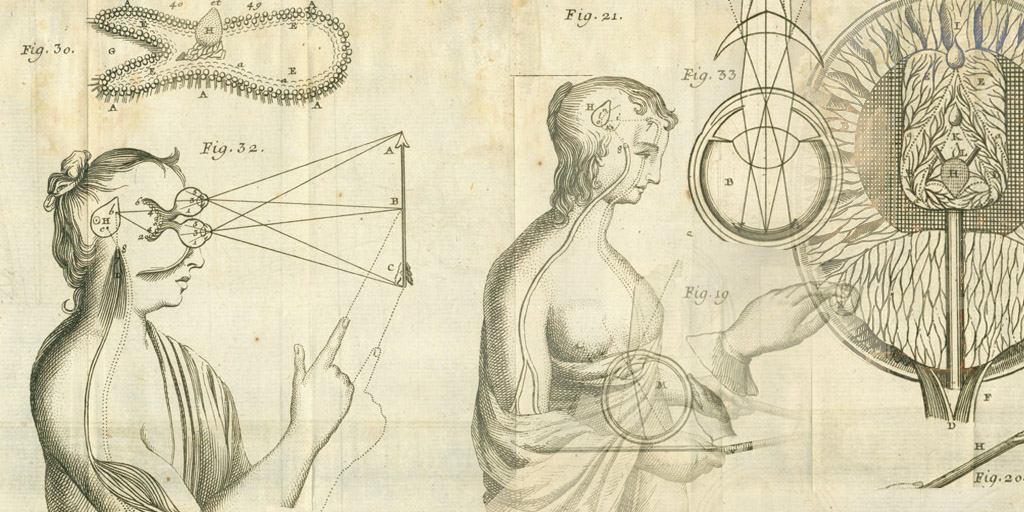
Aristotelian (Hylomorphic) and Cartesian (Dualist) frameworks are two different approaches with significant implications on how we see individual beings.
The Aristotelian framework fits well with religious and indigenous traditions. It sees the soul as the form of the body. But this view is often neglected by the Baconian/Cartesian framework. The tradition that only humans have souls is the legacy of Baconian and Cartesian thought, which arose only 400-500 years ago. They oppose Aristotelian thought, where plants and animals also have souls. But the Baconian/Cartesian view sees “nonhuman lifeforms” (plants and animals) more like machines. They’re meant to be dissected, to be reverse-engineered, for us to figure out their mechanism and function.
The Aristotelian “soul” or religious/indigenous “spirit” has a deep connection with nature, and this is shared by all beings, including nonhuman lifeforms, and shared by all things. This is true in Avatar.
In a religious tradition like ancient Judaism, the word used for “spirit” is ruach, and this literally means breath. And in an indigenous tradition like Tarahumara, it is also breath. It’s because when they observe that a person’s breath is gone, that person is also gone—or dies.
Most traditions like these explain that death happens when the tenant residing in the body is gone, such as air, blood, or water. We see this all the time. Without the essential components of nature, we cannot live. When we lose air, blood, or water, we die.
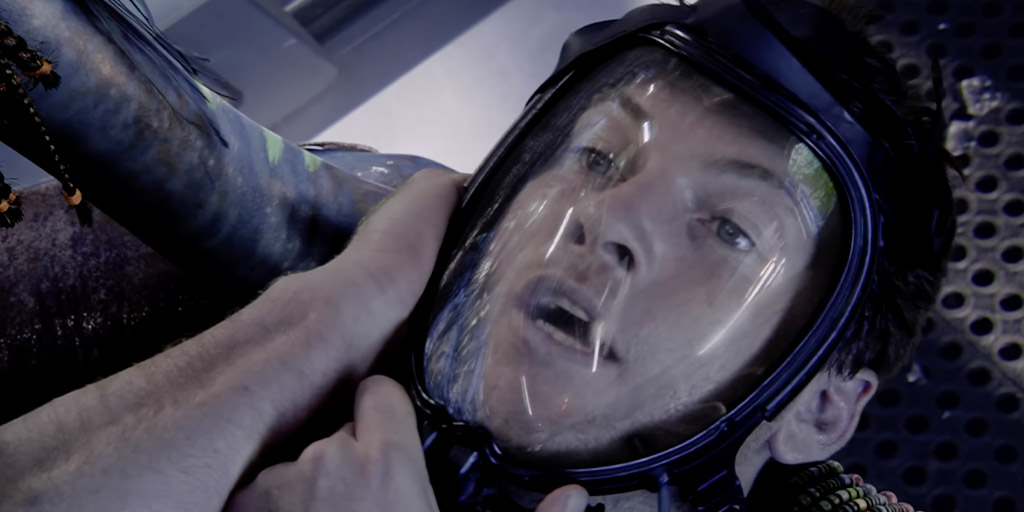

In Avatar, without a body, without breath and without water, there is no life that sustains the soul. Without the material, there cannot exist the spiritual. Without matter, there is no spirit. If there is no body of an avatar or recom, or even of Eywa, there cannot be a mind-transfer or soul-transfer.
So, it is interesting that in Avatar there is a beautiful mix of Cartesian approach to the nature of the soul (Dualism) but Aristotelian approach to the soul of nature (Hylomorphism). And this is common to indigenous, religious, and Na’vi traditions untouched by modernism.
We should look forward to, in the Avatar universe: more clarity on the soul, how the soul is affected by the first human whose soul “communes” with and finds a perpetual home in Eywa, and perhaps even the soul of Eywa Herself.
Oel Ngati Kameie,
— Pandoran Philosopher
 PANDORAN PHILOSOPHER
Leave a comment