
Both Jake and Varang ask the same haunting question: Where was Eywa? The former wonders after he loses Neteyam, and the latter after she loses her forest and many of her people.
This is the problem of evil: how can horrendous evils coexist with a good and powerful deity? While Jake doesn’t doubt that Eywa is still good and powerful, he doubts that Eywa would always use her power to prevent evil. Varang, on the other hand, doubts that Eywa is powerful.
She declares that Eywa is “a weak mother for weak children.”
The Problem of Evil
In philosophy, the problem of evil is generally framed as follows:
- If God is good, then God doesn’t desire evils to happen.
- If God is powerful, then God can prevent evils from happening.
- Therefore, because evils exist, either God is not good nor powerful—or God doesn’t exist.
But there might be good reasons for God allowing evils to exist. This is different from God causing evils to exist. It’s the difference between Eywa allowing Neteyam to die vs. causing him to die. God or Eywa might allow suffering to occur for all kinds of reasons, just as they both might allow redemption to occur for other reasons.
For example, Neteyam is with his ancestors now, and his death brings about the “soul-making” or unexpected opportunities for character growth in his family. It’s not that Neteyam’s death happens this purpose, but good can come out of evil. Ta’nok’s (the blinded tulkun) suffering and survival was also allowed, not caused, by Eywa, which brings about a compelling “blind witness” that changes the ancient Tulkun Way for the greater good.
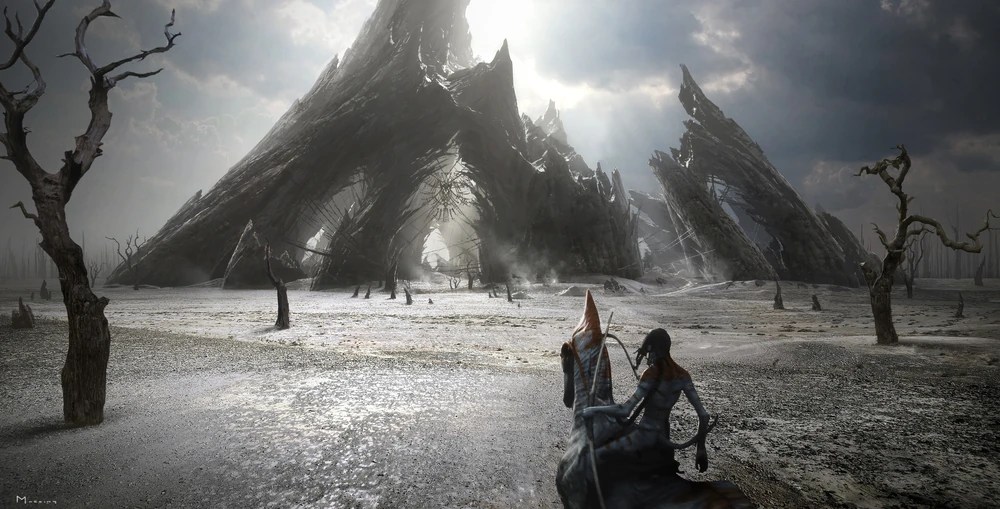
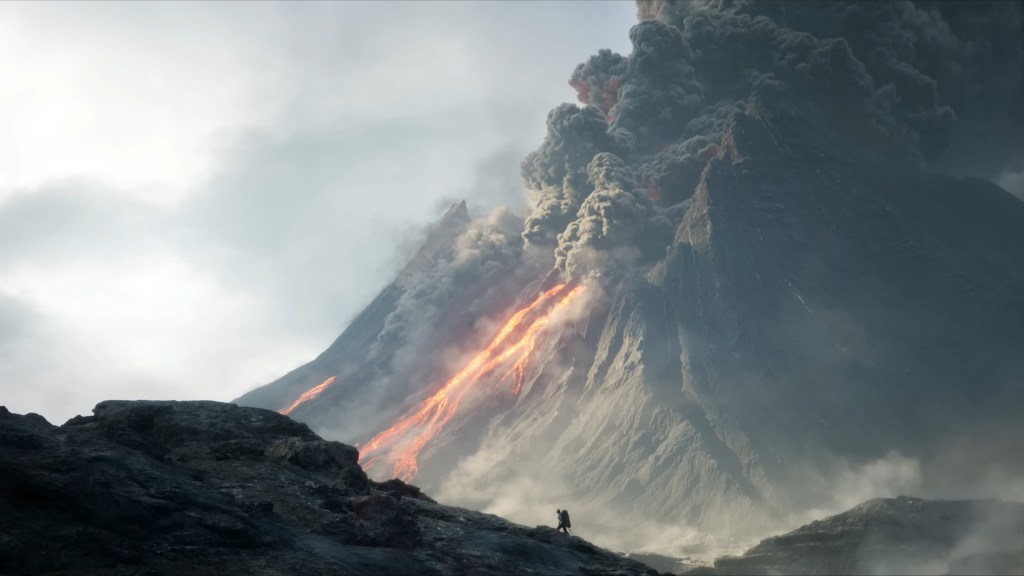
Varang seems to think that Eywa allowed but should have prevented the volcanic eruption. If she thinks that Eywa caused the eruption, then she’d think that Eywa is powerful. But she believes that Eywa is weak by failing to protect her forest from the eruption.
In other words, here is Varang’s theology:
- If Eywa is good, then Eywa doesn’t desire her people and her forest to perish.
- If Eywa is powerful, then Eywa would’ve prevented such destruction.
- Therefore, Eywa must be weak.
Perhaps she overlooks Neytiri’s theology that Eywa doesn’t choose sides and only protects the balance of life. If Eywa is meant to always protect all life, without leaving space for evils or tragedies to happen, then perhaps Eywa can be said to be weak.
Neytiri’s theology is more nuanced in that Eywa does not guarantee the safety of all peoples and all places at all times. Her goodness might actually manifest in ecological and spiritual balance, with suffering being allowed for the sake of the greater order of nature or interconnectedness of life.
While Varang’s theology is more justice-oriented and short-term in a local scale, Neytiri’s theology is process-oriented and long-term in a cosmic scale.
The Providence of Eywa & Nature of Goodness
It’s important to observe that Eywa also works subtly and silently in creating far-reaching effects across the Avatar films.
For instance, when Neytiri first sees Jake in Avatar (2009) and almost shoots her arrow to kill him, a woodsprite/atokirina softly lands on her arrow. If she were to kill Jake, the movie would’ve ended there and an avatar Toruk Makto was never to be seen. At the end of the film, Eywa bridges Jake’s consciousness to pass into his avatar.
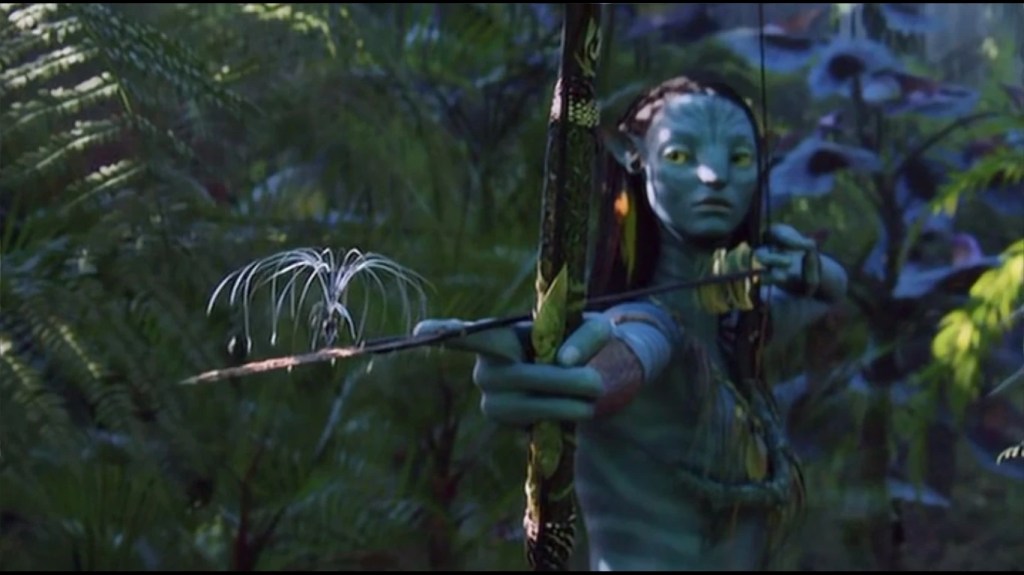
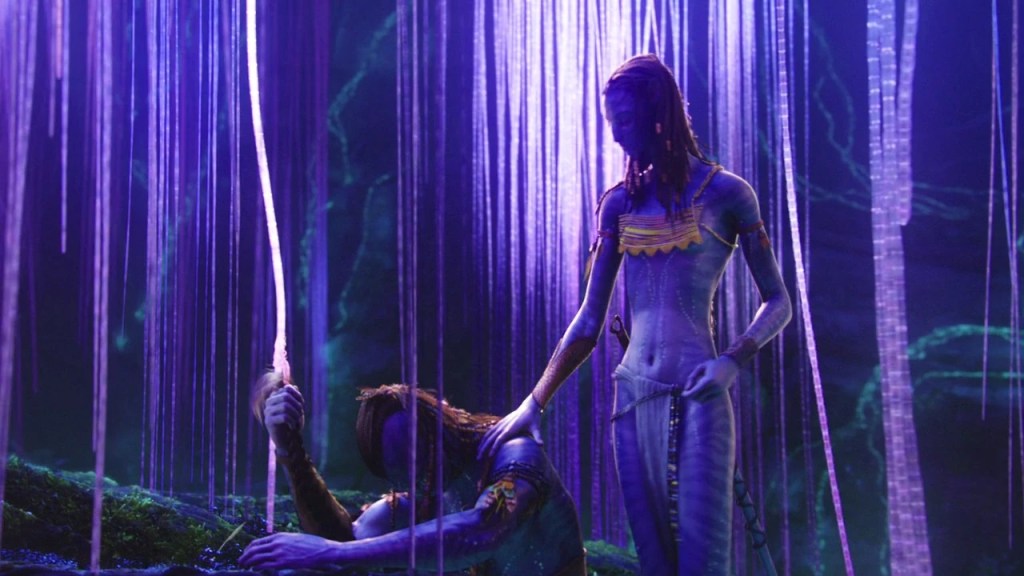
In the next film, Eywa also creates Kiri, who has been instrumental in Fire & Ash and who would reach her full potential in the upcoming films. Even Eywa welcoming Grace’s spirit and providing Spider’s access into the spirit world—having them be accepted as part of the Na’vi people—show how Eywa orchestrated a realized harmony between the Na’vi and (their worst enemies) the humans.
The Three Laws of Eywa have also protected Pandora from exploitation. Eywa plants seeds and provides signs. Eywa hears prayers. And She answers them when it seems fitting.
Eywa’s allowing suffering is not a weakness on Her part but a commitment to the cycles, the balance, and the flourishing of life; perhaps preventing every evil and tragedy would disrupt the natural and moral ecology of Pandora.
Perhaps Eywa also shows us the problem of goodness: that because She only protects the balance of life, She doesn’t owe us anything, so She’s not obliged to choose sides yet answers Jake and Kiri toward victorious battles against massacres. But She is also merciful to all. She gives overabundantly without requiring us to give back—exercising goodness in providing aliens and natives abundant life here and now and in the hereafter.
We experience goodness all the time in our lives. Our daily bread, our friendships, our air we breathe, our 3D movies, our nice beds. Goodness is everywhere to be found; we just need to learn how to see.
Our Daily Eclipse
I grew up in a country with many volcanic eruptions. I still remember the fear of ash coming from Mount Merapi’s deadly eruption in Central Java as I was living West of Java. But at one point, I hiked up to the crater of Mount Bromo in Central Java and was in awe of its sublime beauty.
Earth, as is Pandora, can be powerfully dangerous, with suffering caused by natural evils. But there are also moral evils caused by humans and the Mangkwan.
Varang’s theology actually embodies some of the tension in modern responses to evils: seeing evil as evidence of divine failure or neglect as opposed to a consequence of a freely operating and balanced universe. We humans often desire God to be an “immediate interventionist” and a morally perfect agent according to our perspective. Varang’s theological and psychological reaction is valid, but it is limited from a narrow understanding of Eywa’s nature or purposes.
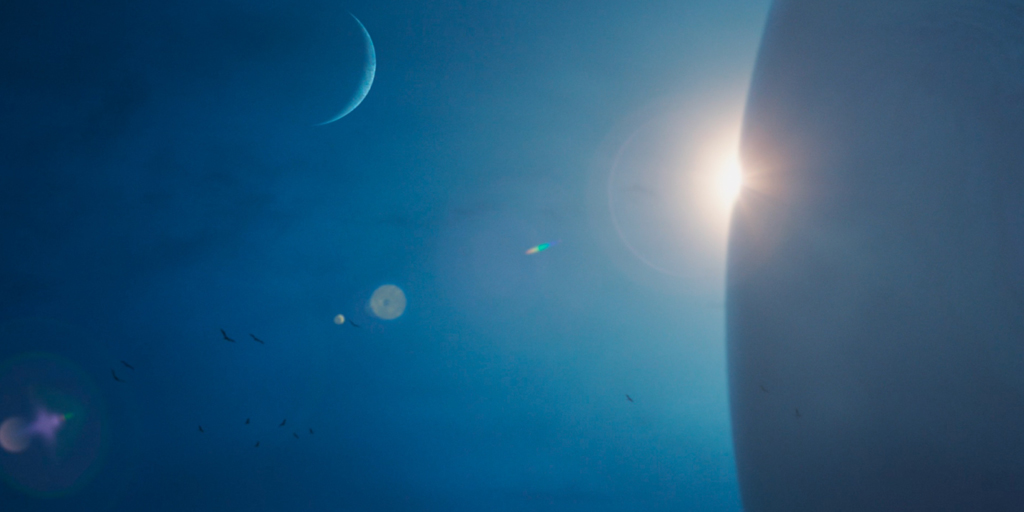
But we also have to remember what the daily eclipse on Pandora shows us about reality—that after the dark comes the light—such as when Neytiri sings Neteyam’s song in Fire & Ash. “The light always return,” narrates Lo’ak. And his mother remembers that Eywa’s goodness is relational, subtle, and cosmic.
Pandora’s Box & Pandora’s Hope
In light of evil, Avatar teaches us not to lose hope. We should grieve, but we also shouldn’t be the perpetrators of evils because we’ve experienced evils. We should learn how to fight evil, be strong in our hearts, and honor those who have come before us—carrying their spirit within us.
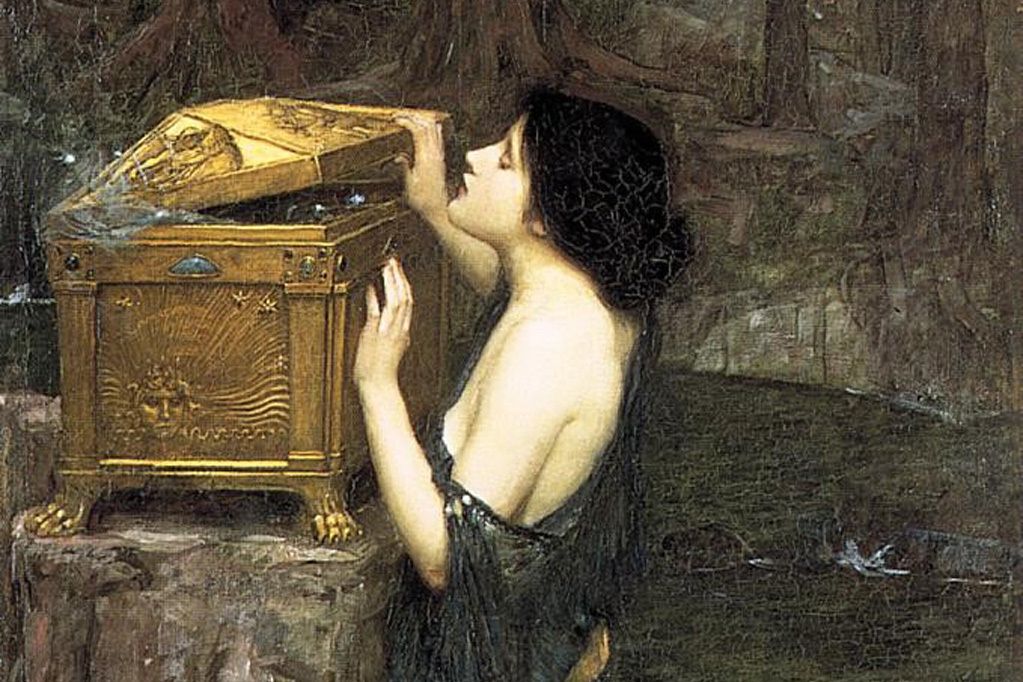
The ancient Greek story of Pandora itself reflects this truth. When Pandora, the curious girl, opened the forbidden jar (later called Pandora’s Box) that lets out deadly evils and troubles into this world, there was enough time to close it and keep one thing in the jar in Pandora’s hands: “hope.”
Sometimes suffering doesn’t make sense. It doesn’t have to. Maybe it will, maybe it won’t. But not everything is lost, and we must hold on to hope. Pandora’s cycle of night and day, and the eclipse’s darkness followed by the midday sunrise, continues unbroken. The light remains faithful. And we must remain hopeful.
Oel ngati kameie.
*Note: there are many kinds of “problems,” “evils,” and solutions to the problems discussed in the literature on evil. I’ve only mentioned a few for the sake of brevity and focusing on the relevant parts of Fire & Ash, but I’ve provided suggested readings on the Resources page!
 PANDORAN PHILOSOPHER
Leave a comment