Continue our philosophical exploration from Part One (which covers Chinese Philosophy, Eastern Orthodoxy, and Maoridom) by reflecting on the Tulkuns and the Na’vi in The Way of Water.
II. Tulkuns: The Paradoxical Virtues and Mythos of Water
Now, we will explore the giants of the sea, or the tulkuns and SeaDragon, and their connections to the seemingly contradictory virtues of water, namely, harmony vs. disorder.
In the Ancient Near East (including but not limited to Judeo-Christian, Egyptian, Babylonian, etc.), the sea represents chaos and disorder and is the dwelling place of sea monsters. The sea cliffs corner this very earth and demand last goodbyes to those who step foot on a ship, as the mercy of the waves and the winds determine the fate of many. In some mythos, not only humans but the gods are fearful of the sea, since its inhabitants or sea monsters embody the principle of death: irrational, untamable, violent.

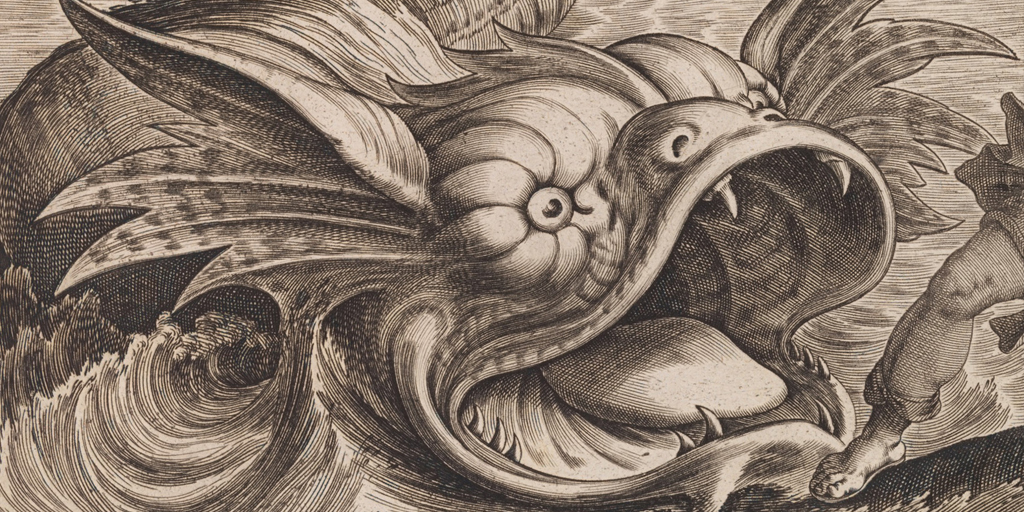
However, in Maori cultures, as seafarers, such representation is seemingly nonexistent. And the so-called “sea monsters” are “sea guardians.” They embody the principle of life, as they are non-violent. To quote the fandom of Avatar wiki:
The Maori people, the inspiration source of the Metkayina clan, have traditionally regarded whales as important figures such as being incarnations of Tangaroa (the water god), Taniwha (mystical beings), and as tribal guardians.
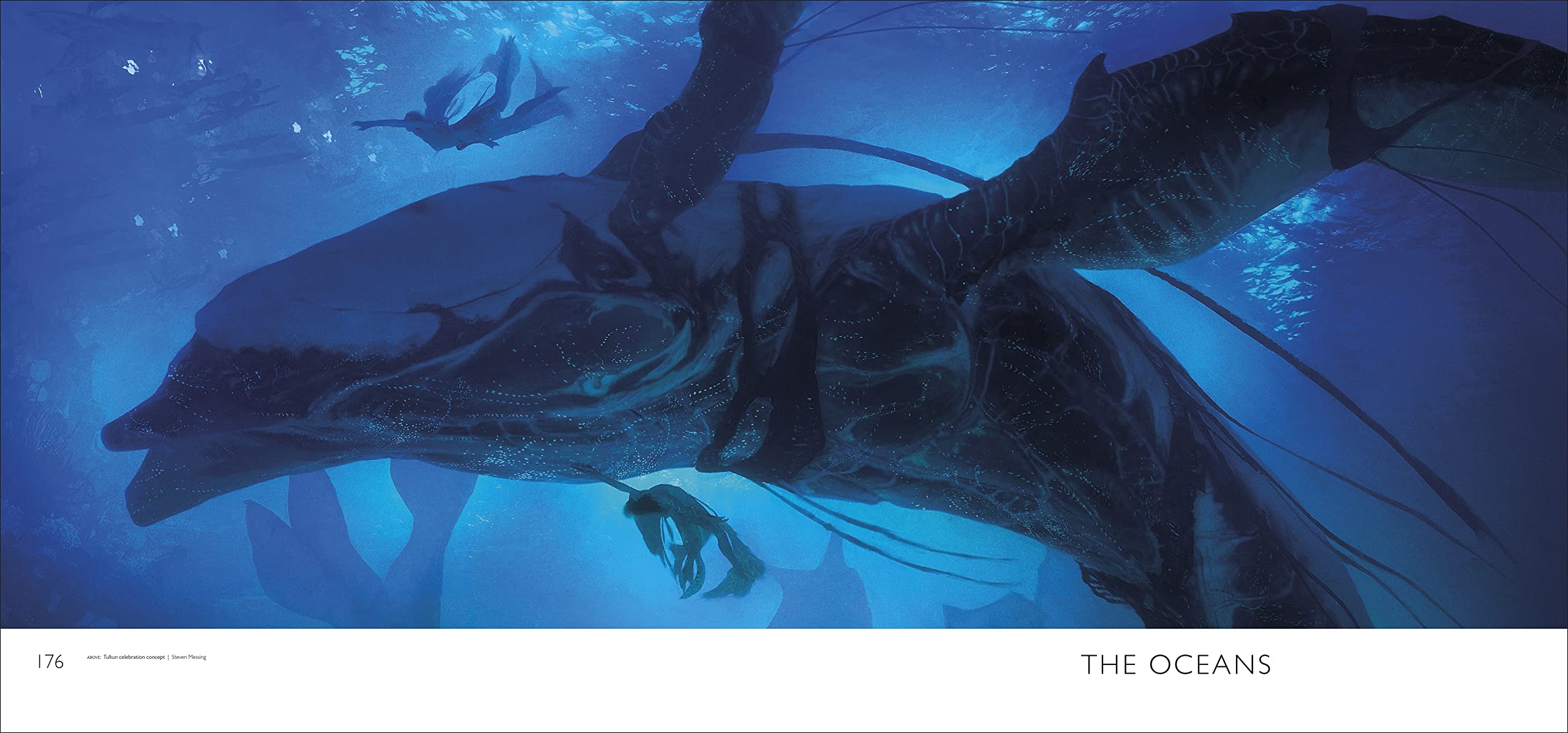
Yet the first time we meet a tulkun in Avatar 2, we see his violence against an akula/shark. He is an outcast, yet we learn that he is noble, playful, and gentle. We find that his name is Payakan, who is exiled because of that same violence that saved Lo’ak. We also learn that the tulkuns used to kill each other for territory and revenge (again, embodying the principle of death or the sea as a place of disorder).
On the other hand, from both the scenes of tulkun migration and tulkun hunting, we implicitly learn that the tulkuns are not only highly intelligent and creative beings but choose to be non-violent. It was only until Lo’ak bonded with Payakan that Tonowari explained the Tulkun Way: the way of non-violence. This Tulkun Way is not only part of Tulkun philosophy but is an essential mark of Tulkun identity. (Hence, they embody the principle of life and the sea as a place of harmony.)
Like the permeability of water… Payakan manifests the power of gentleness and the power of fierceness
However, Payakan arguably embodies both the principles of life and death—or the virtues of water that seem to be contradictory. It’s no wonder that his name means “Water Brother” in Na’vi. Like the permeability of water to flow or to crash, Payakan manifests the power of gentleness (by befriending an outcast) and the power of fierceness (by defending the outcasts).
So, the film portrays two great sides of the tulkun that manifests the permeability of water: harmony and pacification (the Tulkun Way of pacifism/life) versus flexibility and destruction (Payakan returning to the “older” Tulkun Way of violence/death). In this sense, the Tulkun and Payakan are like two waves colliding in one sea. And tension climaxes when Payakan becomes the sea monster that attacks the SeaDragon.
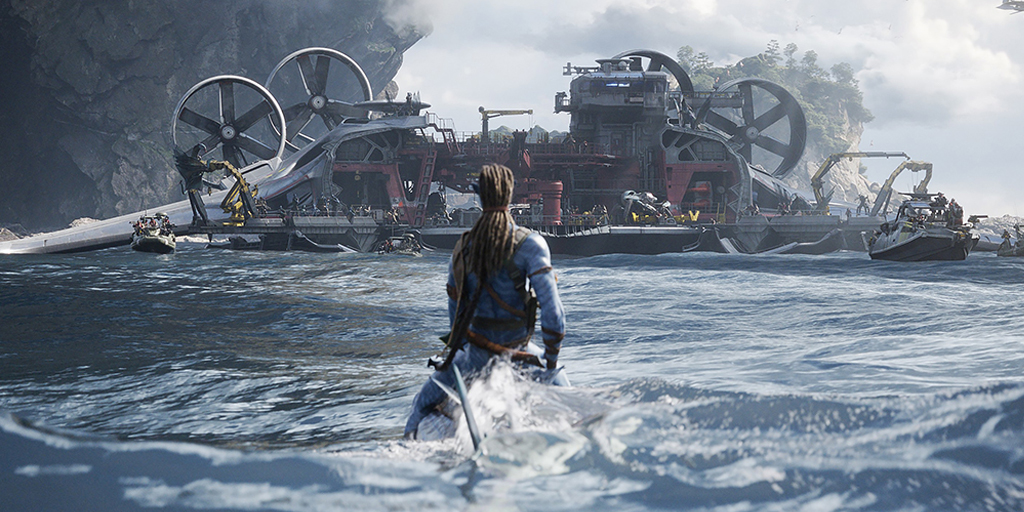
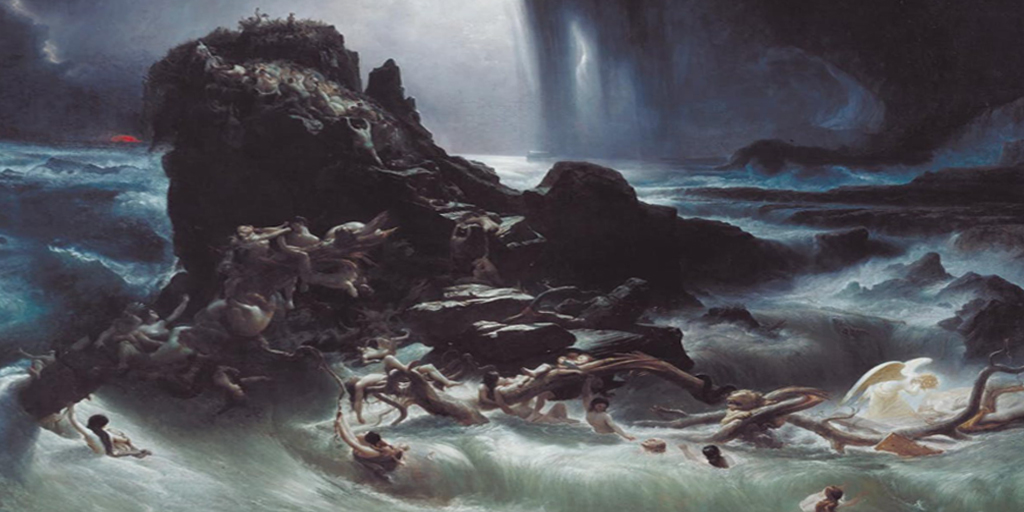
The fate of SeaDragon in the final act of Avatar 2 reminds me of another element on the Way of Water that I haven’t mentioned: great flood narratives (on top of sea monster narratives). The flood narratives usually convey divine retribution as a means of purging or cleansing. In this way, we could say that SeaDragon, for being the “sea monster” that commits the crimes of terrorizing and killing the “sea guardians” or the tulkun, is being flooded and thereby purged by the sea (albeit in an epic way!). The sea gives and the sea takes.
*My article, “The Ethics of Payakan,” explores the Tulkun Way and provides an introduction to moral frameworks: right or wrong, good or bad, and wisdom.
III. Na’vis: The Unified Virtues and Cycles of Water
Finally, we see in the final act of Avatar 2 further scenes of the Na’vi returning from and to the sea, respectively, via (1) Lo’ak reciting the philosophy of water to Jake while saving his life from the sea and (2) Neytiri singing the songcord after Neteyam in his death becomes one with the sea.
So, we can now unpack the connections of (1) breath and life with oneness of nature and the harmony of water, and (2) death with borrowing from nature and the cyclicality of water. #2 can be contrasted with the human desire for immortality—cheating death and extending life not merely through water but another substance called Amrita (which can be extracted from a tulkun). It is the fountain of youth and elixir of immortality.
One of the first TEDx videos that I watched was (to my present delight) on the Taoist philosophy of water, adapted from the Tao Te Ching, and in particular this passage: “The supreme good is like water, which nourishes all things without trying to. It is content with the low places that people disdain. Thus, it is like the Tao.” The philosophy is summed up in 3 words, cleverly abbreviated as H-H-O or the chemical makeup/abbreviation of water. The letters respectively stand for humility, harmony, and openness. And I couldn’t help but notice that Tsireya embodies all three.

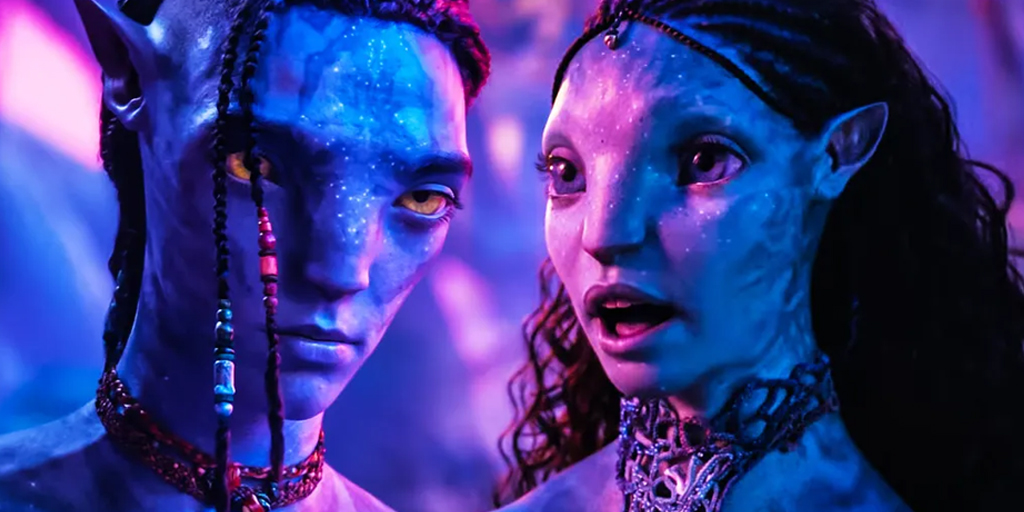
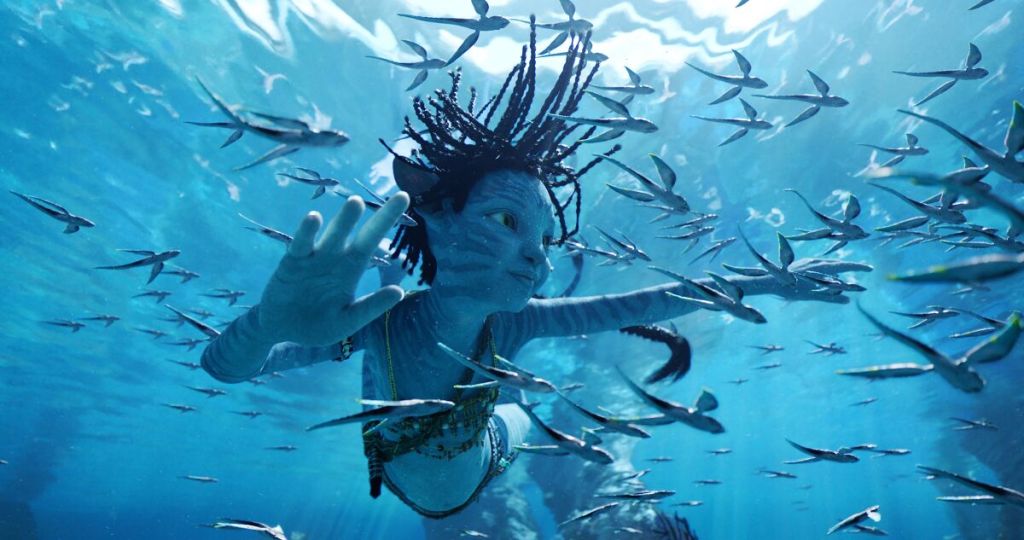
In her humility, pursuit of harmony, and openness, she can accept strangers and outcasts as they are—the Sullies who are the “forest people”—and pass down knowledge on how to be one with the sea to the children. The Omaticaya childre must be, to quote Mo’at in Avatar 1, a “cup that hasn’t already been filled” to become one with the Metkayina people. It is then these very children (who also had to learn humility, harmony, and openness to learn the ways of Metkayina) that saved the lives of their parents from being swallowed by the deep waters, the flooding, the SeaDragon.
In that moment, Lo’ak recited to his father the second time we hear the Metkayina sayings on the philosophy of water:
The Way of Water has no beginning and no end.
The sea is around you and in you.
The sea is your home, before your birth and after your death.
The sea gives and the sea takes.
The Way of Water connects all things. Life to death. Darkness to light.
Lo’ak simply teaches his father how to breathe and to adapt in the waters. In the spirit of Taoism, where all energy is connected and where we can harmonize with water or nature, Lo’ak saves his father and Kiri her mother and sister (again, by harmony with the waters). And in their brother or Neteyam’s death, Jake recalls that all energy is borrowed, and we see his son commune in water or nature. Hence, we see that (1) the Na’vi approach to life or survival resonates with the harmony of water and (2) the Na’vi approach to death or giving back life resonates with the cyclicality of water. What I mean by #2 is that water has a cycle: from the earth to the sky and back again—in the form of liquid to vapor to rain or snow. In the same way, cycles of life and death are acknowledged by the Na’vi.
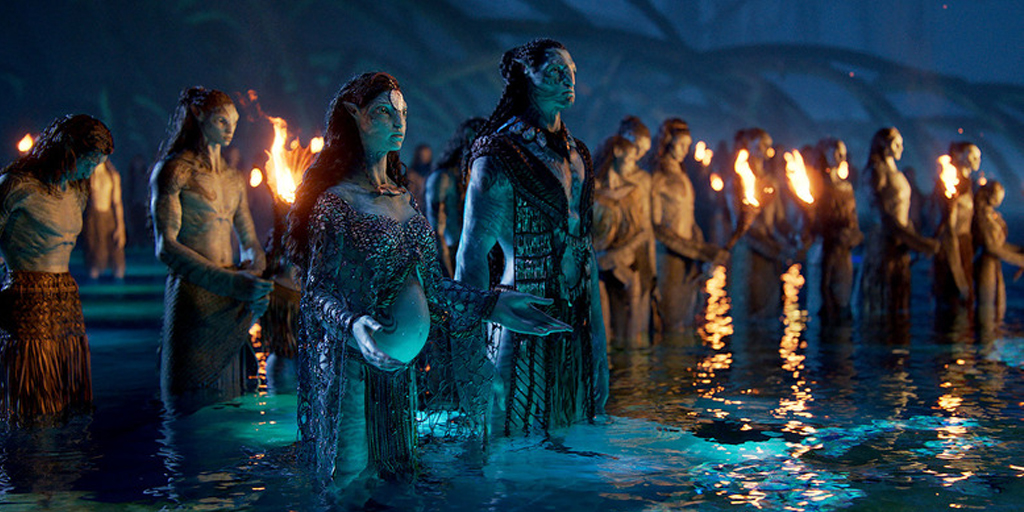
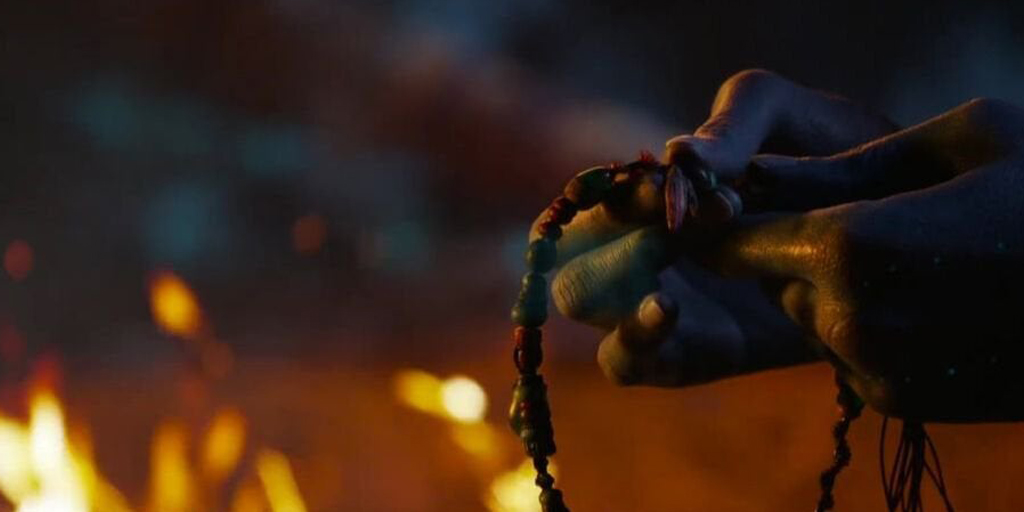
The songcord perfectly encapsulates this truth and spirit, opening the movie with a sung celebration of Neteyam’s life and closing the movie with a sung remembrance of Neteyam’s death. Every bead recounts a story, whether it be a milestone or tragedy, and every cord has an end.
While the Human Way in Avatar 2 is to transcend life or trample death (through Amrita, Recoms, etc.), the Na’vi Way acknowledges, and embraces, the cycle of life and death (even with Kiri in the picture). The sea gives and the sea takes. The sea is your home.
Now we briefly call back to the Maori way of viewing the sea as ancestor, as part of a genealogy—part of a cosmic history and family. They traditionally view the lakes and rivers as providers, sometimes even as mothers. In the same spirit, the Na’vi view the great Pandoran sentient as Mother and the Tulkun sentients as Brothers and Sisters. And this can be contrasted with a fourth sentience that I have in mind in the Avatar universe beyond Pandora, the Tulkun, and the Na’vi: the humans.
*My article, “Life, Death, and Immortality in Avatar 2,” explores Recoms, Amrita, Kiri, etc.
IV. Humans
The fourth mind in this article, namely ours, has the power to turn the oceanic surface and depths of the earth from clear blue to blood red and pitch black.
James Cameron has shown us the unimaginable beauty of our earth and horrors of our race through Avatar: The Way of Water. In the film, resemblance marries similarity and difference, that is, between Pandora and Earth.
Earth is Pandora.
Earth is our Mother, as Jake has called our planet in his prayer to Eywa in Avatar 1:
Grace is with you–look into her memories–she can show you the world we come from… They killed their Mother.
But today, we can still prevent Grace’s memory from becoming a real memory in our future. Our Mother is not dead. She is still alive (or else James Cameron’s references of Pandora would be stock photos or videos of Earth from a distant past), and she is as beautiful as the world portrayed in the highest-grossing film of all time. But we can kill her.
This mind of ours is the gateway to both folly and wisdom, to become takers or caretakers, to see Earth as Pandora.
Will we bring destruction into the heart of the sea and the music of the waters—and therefore the life of the world? Will we ruin the very source of life and the creatures that inhabit it—and therefore the whole of mankind? Perhaps the Way of Water can teach us how to live.

Conclusion
We have explored the four sentients in the Avatar universe and their connections with the Way of Water through some insights from Chinese Philosophy, Eastern Orthodoxy, and Maoridom. (And of course, the many facets of water: its universal and essential nature, its genealogy, its paradoxical and unifying virtues, its world mythos, its life cycle, etc.)
This mind of ours is the gateway to both folly and wisdom, to become takers or caretakers, to see Earth as Pandora.
First, we explored Pandoran insights into “Way” and “Water,” particularly the Way as (I) a natural and/or moral force in Chinese Philosophy and as (II) life of and in the divine in Eastern Orthodoxy, and Water as (I) embodying cosmic principles of life, destruction, and purification and (II) personified in the whakapapa as an ancestor and provider that connects all things.
Second, we explored the Tulkun and SeaDragon and their connections with the Way of pacifism vs. violence and sea Water as chaos vs. unity—ranging from sea monsters and great floods in world lore to whales as incarnations and guardians in Maori thought.
Third, we explored the Na’vi living and dying in the sea, the former through the Way of Metkayina’s harmony with Water and the latter through the Way of Songcord that resonates with the cyclicality of Water.
I did not cover everything or every plausible connection to water (which wasn’t my intention), but comment if you do, and I would love to hear from you!
Oel Ngati Kameie,
– Pandoran Philosopher

 PANDORAN PHILOSOPHER
Leave a reply to blimp Cancel reply